Get the Look: Nine Formulas, and Why the Label Was Never the Point
A look is a set of proportions, not a set of receipts. Get the shapes right and it reads correctly in anything; get them wrong and the exact garment from the photograph still will not work.
Updated 18 August 2026 · 8 min read read
The short version. Every outfit below is a formula: one volume against one line. Oversized top wants a narrow bottom, or wide bottom wants a fitted top — you almost never want both loose or both tight. Match the proportion, the shoe weight and the colour depth, and the look survives being built entirely from things you already own.
All 9 on one board
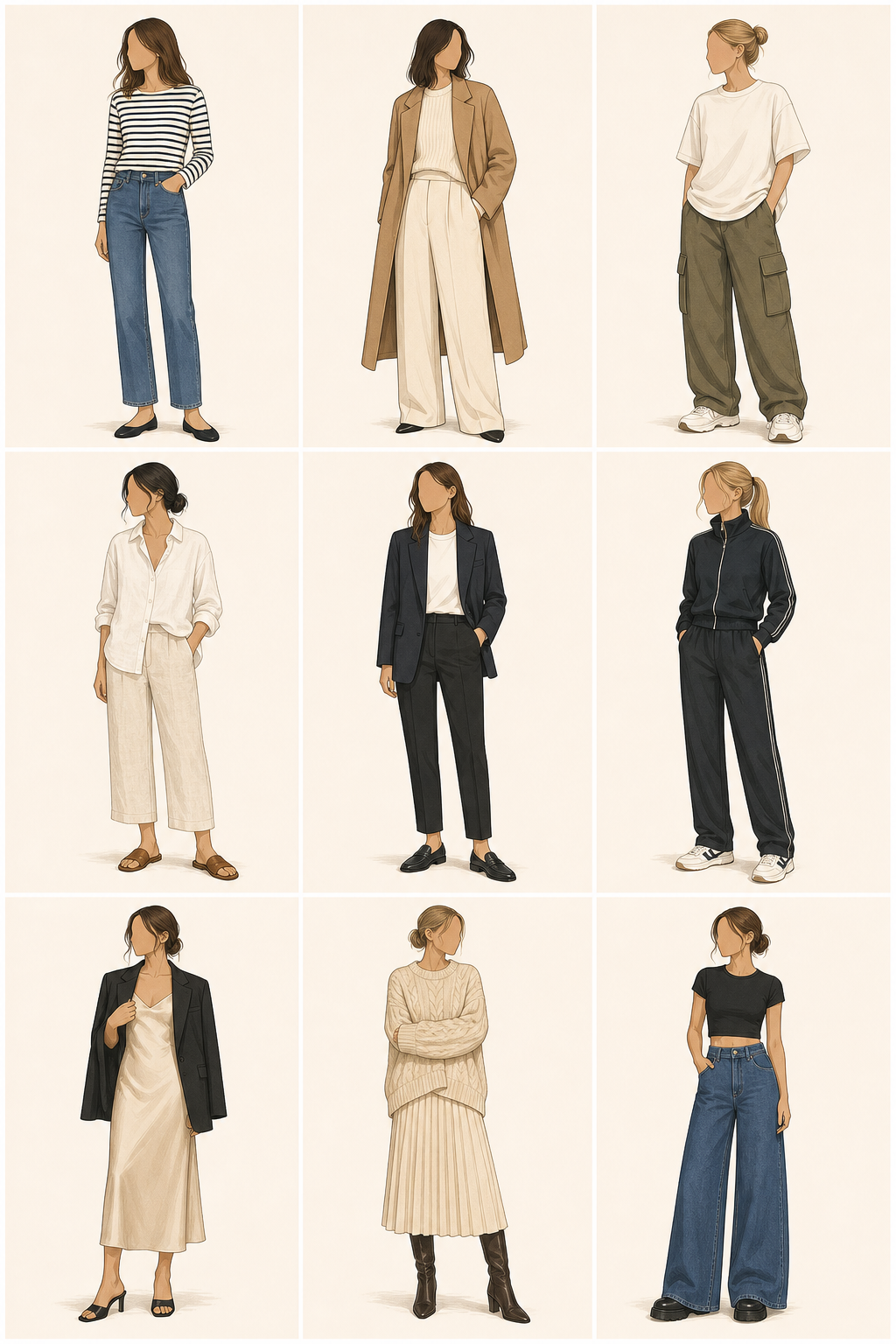
The whole set in a single image — this is the one to save or pin. Each panel is broken out
underneath with what it is actually for.
Nine Outfit FormulasProportion, not labels
01Stripes + denim02Long coat03Oversized + heavy shoe04Linen, cropped05Blazer + tee06Track set07Slip + blazer08Knit + long skirt09Crop + wide denim
AI-generated illustration, and the lead image for this guide. All nine formulas on one sheet — the panels below are cut from it. The title and labels are live text, not part of the image, so they translate with the page.
The nine formulas
Each one gives the shape, the part people get wrong, and what you can swap without losing it.
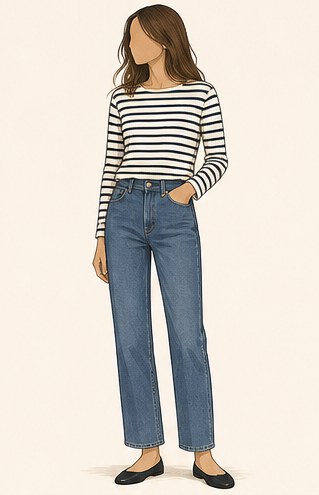
01Stripes and straight denim
A fitted long-sleeve stripe, a straight or slightly cropped mid-blue jean, a flat shoe. It works because everything is close to the body without being tight, so the outfit reads as a single line.
The part people get wrong: the jean. Skinny makes it look dated, baggy breaks the line. Straight is the whole trick.
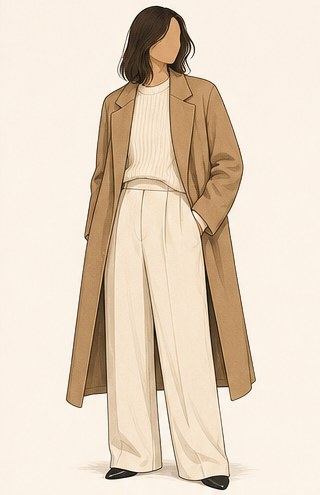
02The long coat over one colour
A long coat in a warm neutral, worn open over an outfit in a single lighter tone. The coat is a vertical frame; the tonal layers underneath stop it looking like a costume.
Swap freely: the coat can be wool, twill or trench. What matters is that it reaches below the knee.
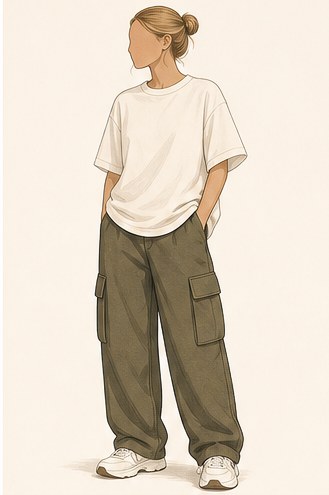
03Oversized tee, loose trouser, heavy shoe
The one outfit here that breaks the volume rule on purpose — both halves are loose, so the shoe has to be substantial to anchor it. A delicate shoe under this makes the whole thing float.
Watch: length. The tee should end around the hip, not mid-thigh, or the proportion collapses.
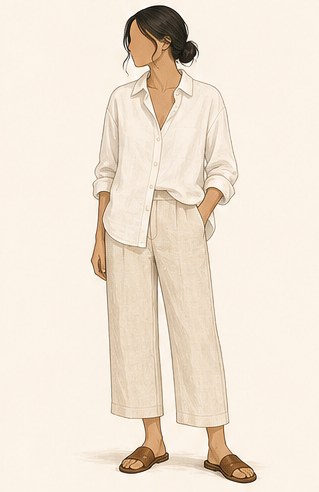
04Linen, cropped, flat
A relaxed shirt half-tucked or worn loose, a cropped wide trouser, a flat leather sandal. The crop is doing the work — showing the ankle keeps a very loose outfit from reading as pyjamas.
Works for: heat. Fails in synthetic fabric, which is the only part of this that is really about material.
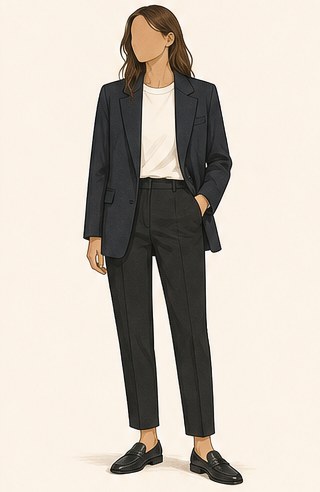
05Blazer over a plain tee
The most useful formula on this page: structured shoulder, plain t-shirt, tailored trouser, flat leather shoe. The blazer supplies all the formality, so everything under it can be plain.
The part people get wrong: sleeve length. A blazer sleeve should end at the wrist bone. This is what tailors are for.
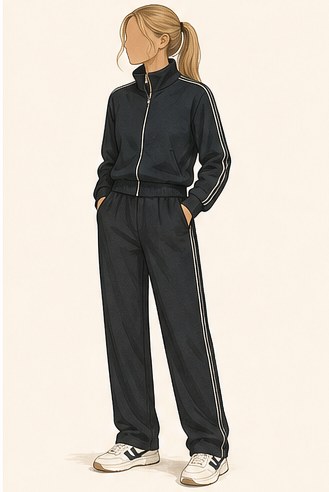
06Matching track set
Top and bottom in the same fabric and colour, cut close rather than baggy, with a low-profile retro trainer. Matching is what makes it deliberate — a mismatched set reads as gym clothes.
Swap: the trainer. A chunky one turns this into a different, heavier look.
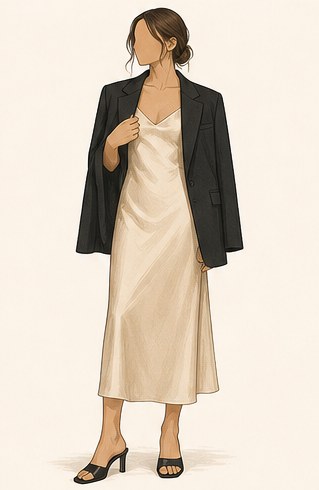
07Slip dress under a blazer
Fluid under structured — the single most reliable evening formula there is. The blazer stops a slip dress reading as underwear, and the slip stops the blazer reading as work.
Watch: the blazer should be looser than one you would wear to an office. Fitted kills the contrast.
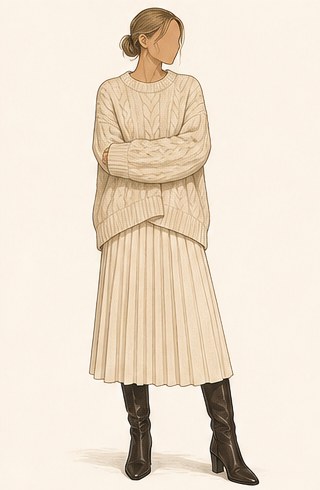
08Chunky knit, long skirt, tall boot
Heavy on top, fluid in the middle, solid at the bottom. The skirt should be genuinely long — hitting mid-calf or below — because a short one under a big knit makes the proportions argue.
The gap matters: boot should meet or overlap the hem. A stripe of bare leg between breaks the line.
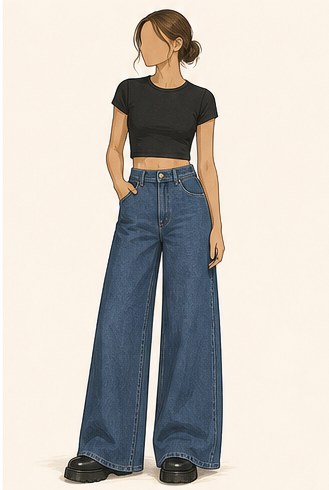
09Cropped top, wide high-waisted denim
Fitted and short on top against volume below, with the waistband high enough that the two meet. The height of the waist is the entire formula — drop it and the outfit stops working immediately.
Needs a platform or heel to carry the width. A flat shoe under wide denim shortens the leg.
AI-generated illustration. Not a photograph. Every panel above is cut from a single generated sheet, which is how the
style stays consistent across all 9.
If you remember three things
One volume, one line — loose top wants a narrow bottom.
Shoe weight decides how the whole outfit sits.
Only drape needs the right fabric. The rest is substitutable.
The label was never what made it work.
The rule underneath all nine
One volume, one line. If the top is loose the bottom should be narrow, and if the bottom is wide the top should be close. Look at any outfit you like in a photograph and you will almost always find this: one half of the body is generous and the other is not.
The exception is panel three, where both halves are loose — and note what pays for it. A heavy shoe anchors the whole thing. Break the rule and you have to compensate somewhere.
What to match when you cannot match the garment
Three things carry a look, and none of them is the label. Proportion — where the hem, the waist and the sleeve end. Shoe weight — whether the shoe is delicate or substantial, which decides how the whole outfit sits. And colour depth — whether the tones are all light, all dark, or deliberately split.
Fabric is the fourth and it matters less than people say, with one exception: anything meant to drape has to actually drape. A slip dress in stiff polyester is not the same outfit at a lower price, it is a different outfit. Everything else on this page is genuinely substitutable.
If you want the shopping version of this, our frugal habits guide makes the case for mending and re-wearing what you own, which is the cheapest way to build any of these.
Why we are not naming brands
Because the honest version of "get the look" is not a list of near-identical products. Telling you a cheap piece IS the expensive piece is a claim we cannot support — we have not handled either, and the differences that justify the price are exactly the ones a photograph hides.
What we can say without inventing anything is how the shapes work, which is the part that transfers to whatever is already in your wardrobe.
Notes
No products are named or linked on this page and there are no affiliate links on it. Nothing here is monetised.
The nine panels are cut from one generated illustration sheet, which is why the palette and line weight are identical across them. The figures are drawn, not photographed, are not real people, and wear deliberately plain garments carrying no brand marks.
No specific garment, designer or collection is depicted or referenced. These are outfit archetypes, not reproductions of anyone's look.
Styling advice is opinion, not fact — it is what tends to read well, not a rule anyone is obliged to follow.
No affiliate links on this page. Nothing here is monetised.
No prices anywhere on this site — they move faster than an article can stay honest about them.