How to Set Up a Fish Tank for Beginners
Eight steps from empty glass to stocked tank. Seven of them take an afternoon. One of them takes a month, and it is the one that decides whether your first fish live.
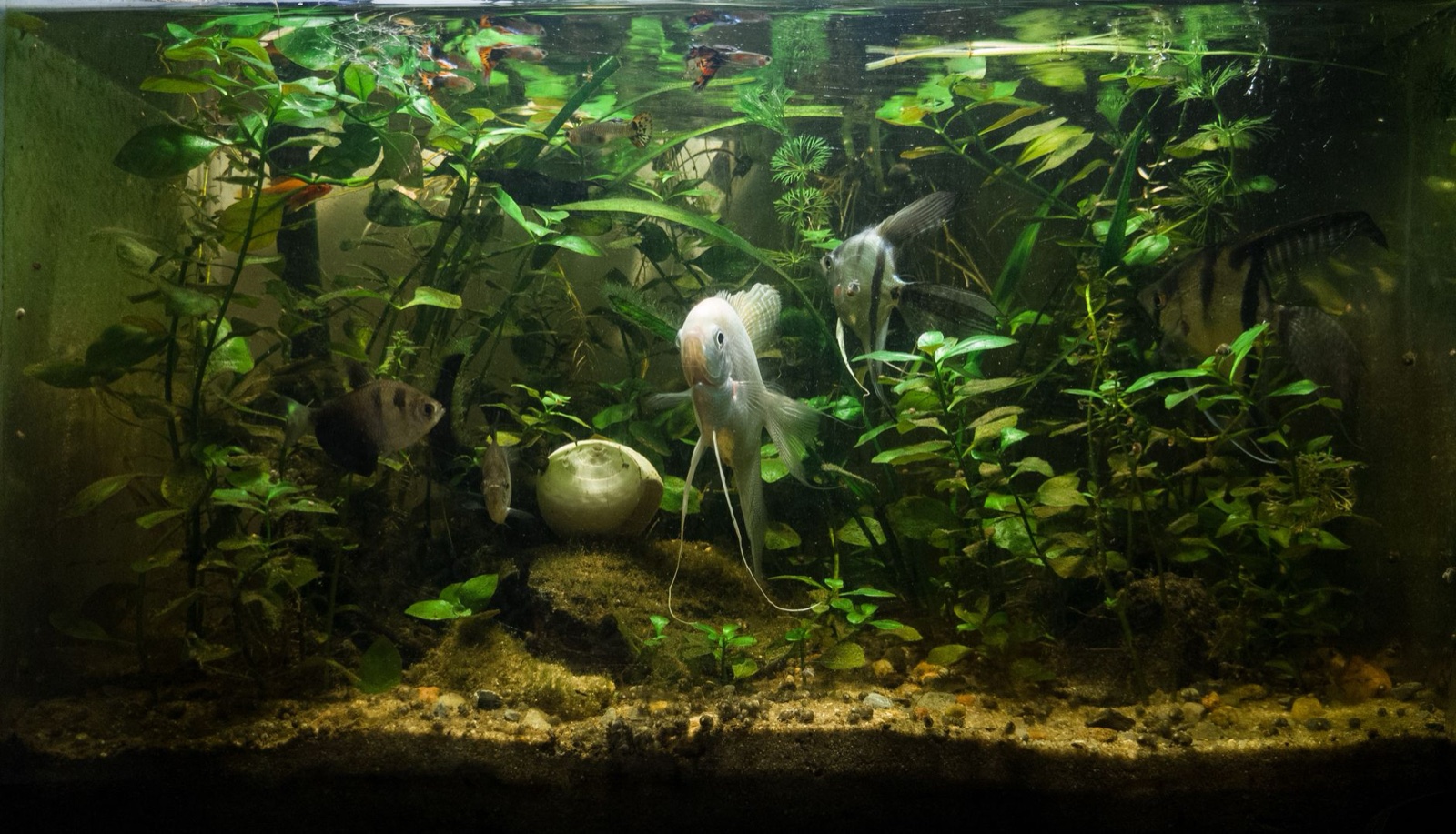
The short version. Buy a 10–20 gallon tank and all the equipment first. Rinse the substrate, aquascape it, fill with conditioned water at 72–78°F, then run the filter with no fish for two to six weeks while the bacteria colony establishes. Test until ammonia and nitrite read zero. Then add two or three fish, and a few more each fortnight.
The one number worth arguing about. Plenty of guides say a tank cycles in one to two weeks. It usually does not, and treating that as a deadline is the commonest way a first tank's fish die — ammonia is still climbing when the calendar says you are finished. Let the test kit decide, not the date.
Choose the tank — bigger is easier
A 10–20 gallon tank is the sweet spot for a first setup, and the reason is counter-intuitive: a bigger volume of water is more forgiving, not less. Waste dilutes, temperature drifts slowly, and one mistake does not spike the whole tank overnight. The tiny desktop cube is the harder tank to keep alive.
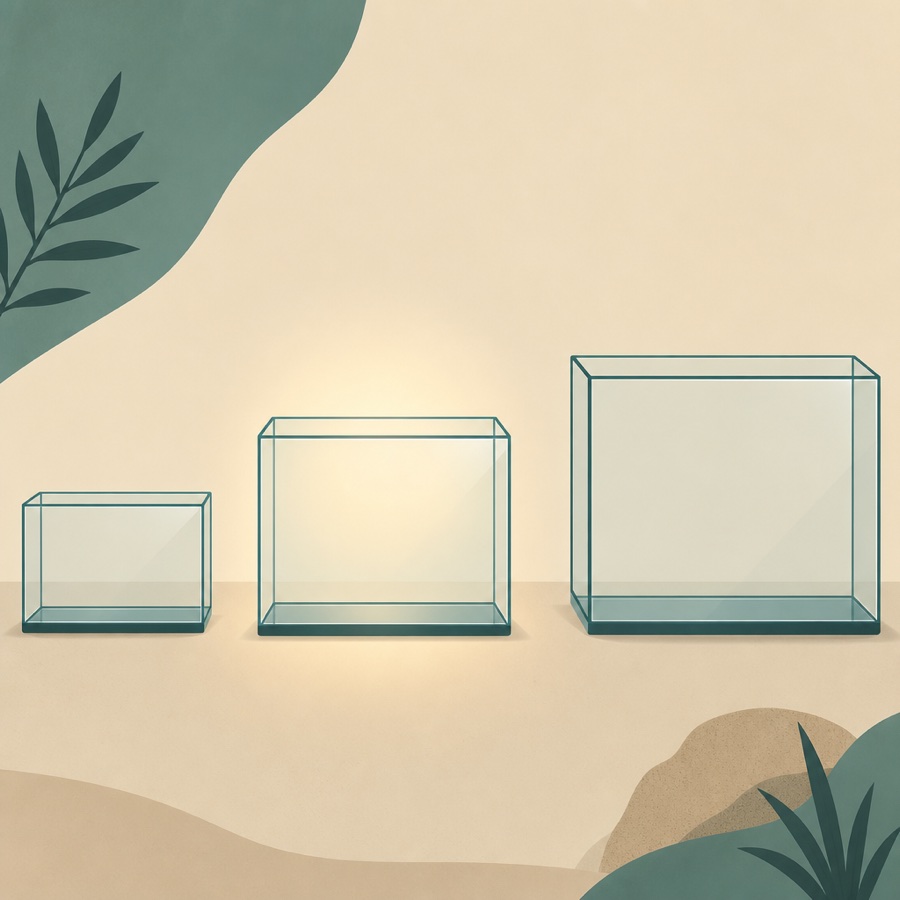
- Glass, with a lid — evaporation is constant and some fish jump.
- A footprint you can actually reach into, front to back.
- Level, solid surface, out of direct sun.
Where you stand it matters more than most guides admit — see where to put a fish tank at home.
Gather the equipment before you start
Buy it all first. A half-set-up tank waiting on a heater is how fish end up in a bucket.
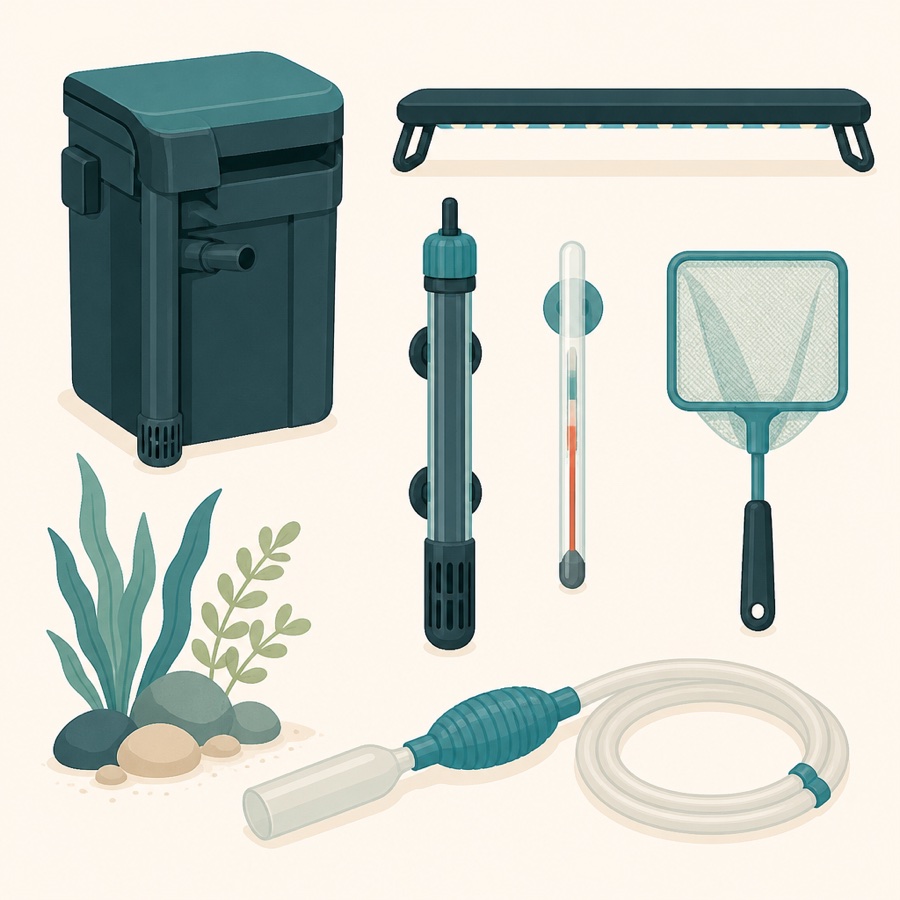
- Filter — rated for your volume or slightly above.
- Heater — for tropical fish; not needed for coldwater species.
- Light — on a timer, roughly 8 hours a day. Longer feeds algae, not plants.
- Thermometer — the cheapest instrument here and the one you will read most.
- Net, siphon, spare bucket — the bucket lives with the tank and never sees soap.
Rinse the substrate, then add it
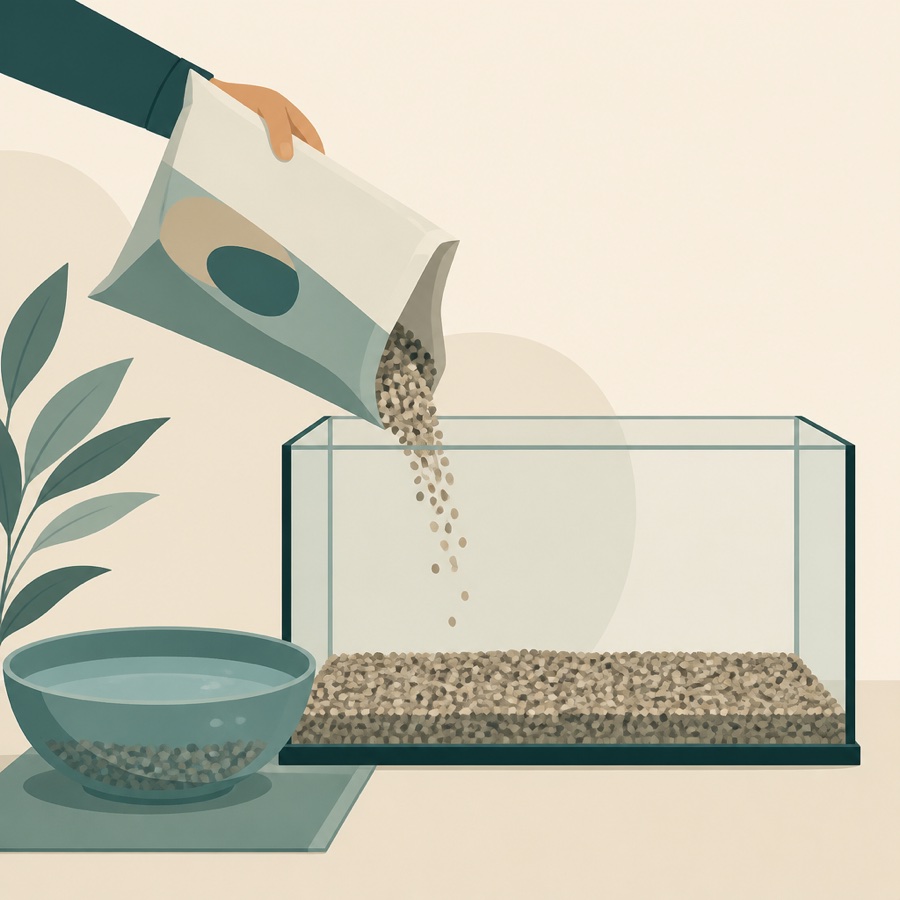
Rinse gravel or sand until the water runs clear. Skip this and the tank stays cloudy for days while you wonder what is wrong.
Two to three inches is enough. It anchors plants and it is where most of your beneficial bacteria will eventually live.
Decorate, leaving open water
Rocks, driftwood and plants give fish somewhere to feel unexposed, which is what actually makes them visible — a fish with no cover hides.
Leave the middle open. It is the swimming room, and it is the first thing people fill and later regret.
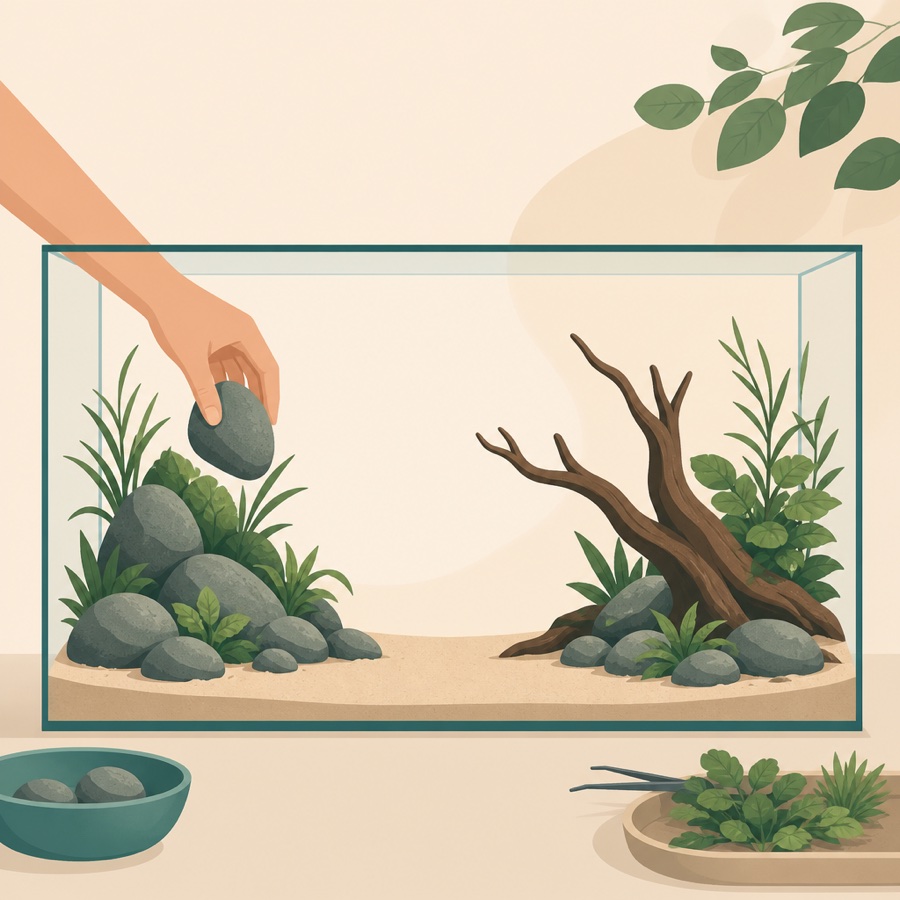
- Wedge decorations so they cannot topple onto the glass.
- Rinse everything before it goes in.
- Nothing sharp near fish with long fins.
Fill it and treat the water
Tap water is treated to be safe for you, which makes it unsafe for fish — chlorine and chloramine kill exactly the bacteria the tank needs. A water conditioner deals with both, and it goes in every time you add water, forever.
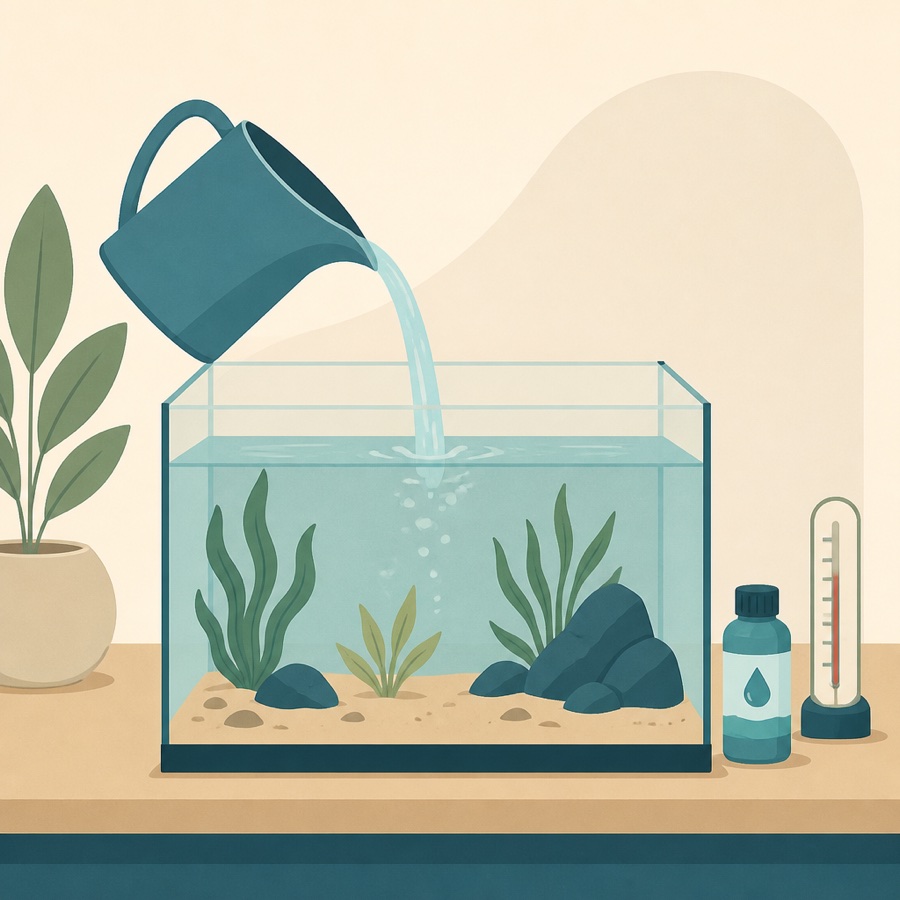
- Pour onto a plate or your hand so you do not excavate the substrate.
- Bring it to 72–78°F (22–26°C) for most tropical community fish.
- Run the filter and heater now, with no fish in the tank.
Cycle the tank — this is the step people skip
Nothing about a new tank is ready for fish. It has water and equipment and no biology: no bacteria colony to convert the ammonia fish produce into nitrite, and then into far less harmful nitrate. Growing that colony is called cycling, and it is the whole reason a first tank fails.
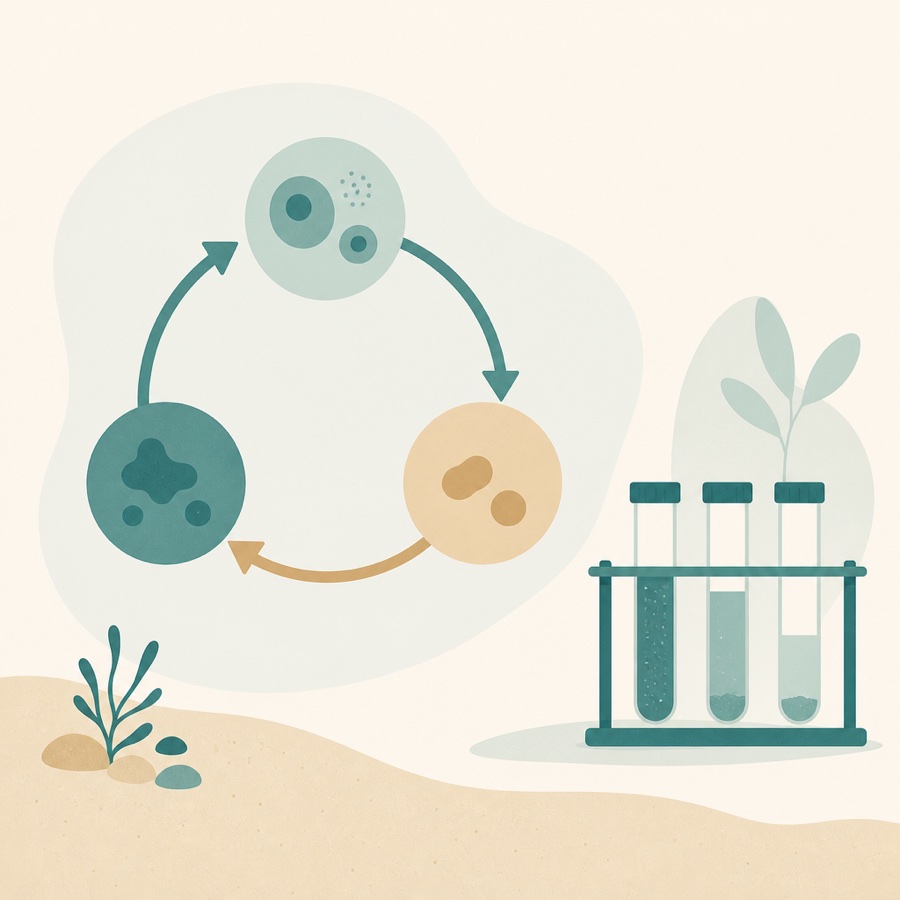
- Expect 2–6 weeks, not days.
- A liquid test kit for ammonia, nitrite and nitrate is the instrument that ends the wait.
- Partial water changes during cycling slow it down; be patient instead.
Add an ammonia source, then test every few days. You are waiting for ammonia and nitrite to rise and then fall back to zero, with nitrate appearing. When that has happened, the tank is cycled — and not before.
Add fish gradually
Two or three hardy fish first. Every fish you add is more ammonia, and the bacteria colony takes days to grow into the extra load — add a full stocking at once and you get a second, worse ammonia spike in an already-cycled tank.
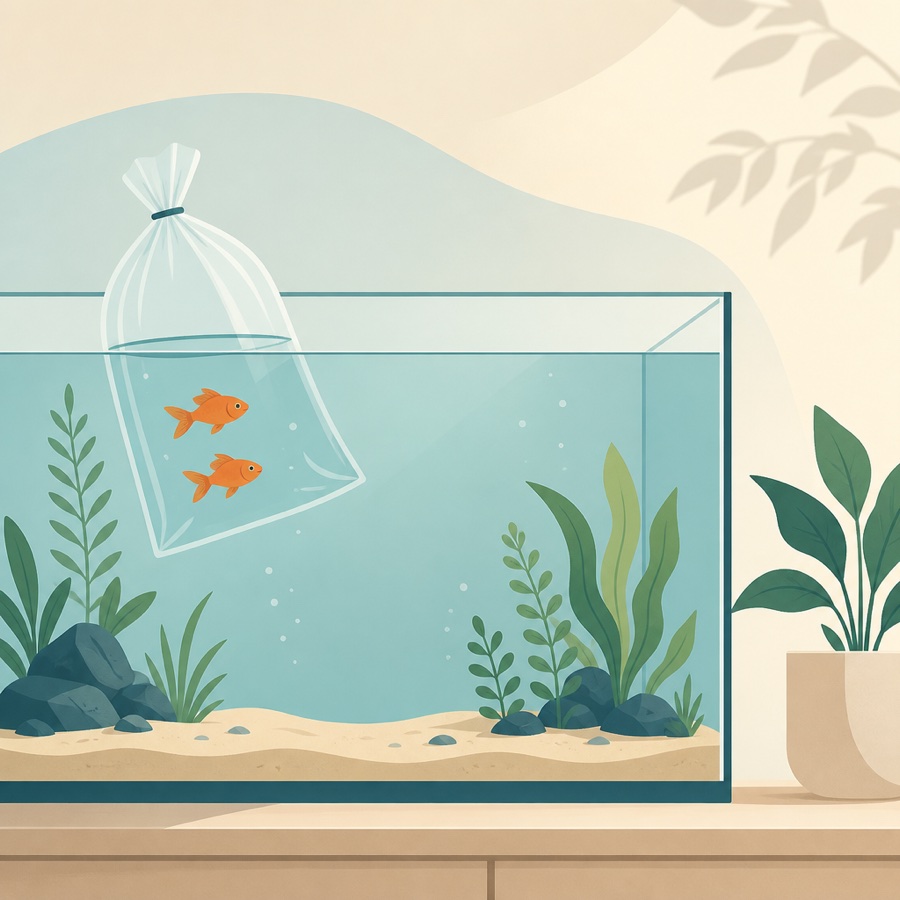
- Float the bag to match temperature, then net the fish in and discard the shop water.
- Wait a week or two, test, then add the next few.
- Research compatibility before you buy, not after.
Maintain it, weekly and briefly
The routine is small and it is the whole job. Tanks do not fail suddenly; they fail from skipped weeks.
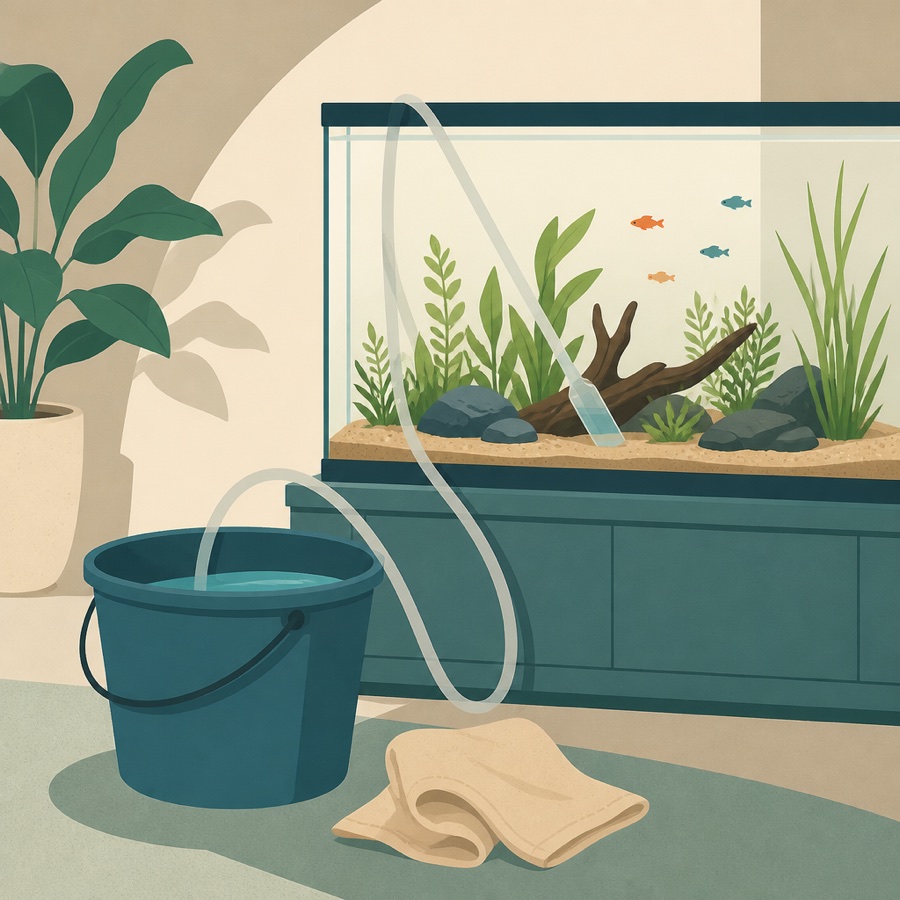
- 20–30% water change weekly, with conditioner in the new water.
- Vacuum the substrate as you siphon — that is where waste collects.
- Feed what they finish in a couple of minutes. Overfeeding is the most common single mistake in the hobby.
- Rinse filter media in tank water, never tap water, and never replace it all at once — that is your bacteria colony.
Good first fish
Hardy, widely available, and forgiving of a tank that is still finding its feet.
Checklist
| Before water goes in | Before fish go in |
|---|---|
| Tank, level and sited | Filter and heater running |
| Filter, heater, light, timer | 72–78°F, holding steady |
| Substrate, rinsed | Ammonia 0, nitrite 0, nitrate present |
| Decor, rinsed and wedged | Two or three hardy fish chosen |
| Water conditioner | Test kit, net, siphon, bucket |
Notes
No products are recommended or linked on this page, and there are no affiliate links on it. The gear itself is listed separately in fish tank essentials.
Temperatures and the 20–30% weekly water change are standard freshwater community-tank practice. The 2–6 week cycling window is a range because it genuinely varies with temperature, seeding and the ammonia source — which is exactly why the test kit is the authority here and a calendar is not.
Illustrations on this page are AI-generated and labelled. Nothing here is a photograph, and no real product is depicted.
No affiliate links on this page. Nothing here is monetised.
No prices anywhere on this site — they move faster than an article can stay honest about them.
How we review · Corrections: email us · All Legit reviews