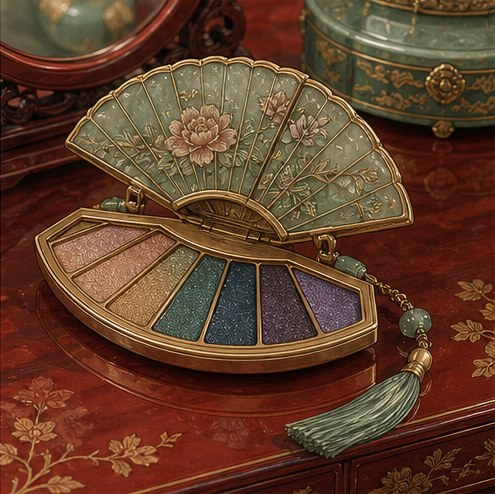
Korean beauty exported a method. Chinese beauty is exporting an object. That single difference explains almost everything else — which categories each one leads, how they reach you, and why one is already in your bathroom while the other is only now arriving on American shelves.
Why this is suddenly worth reading. The Wall Street Journal reports that Proya, one of China’s largest beauty companies, plans to enter roughly 400 Ulta Beauty stores in the United States beginning in November — explicitly trying to follow the path K-beauty took to global reach.
Reported by The Wall Street Journal. We have not independently verified the retail agreement — the detail above is their reporting, not our own.
The short version. K-beauty won on skincare — cushion compacts, modern essences and sunscreen textures that are genuinely ahead of the Western market — and it won by selling a repeatable routine. C-beauty leads on colour and design: carved lipstick cases, engraved compacts, palettes built like objects you would leave out on a table. The gap is not quality. It is what each one decided the product is.
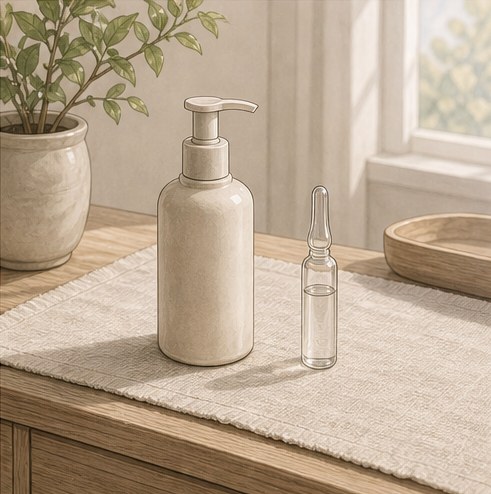
The export was a process: cleanse, hydrate, layer thin to thick, protect. The famous ten-step routine was never a prescription so much as a menu, but the underlying idea — that skin is a practice rather than a purchase — is what actually travelled.
Packaging follows the philosophy. Most of it is deliberately plain, because the product is not meant to be the point.
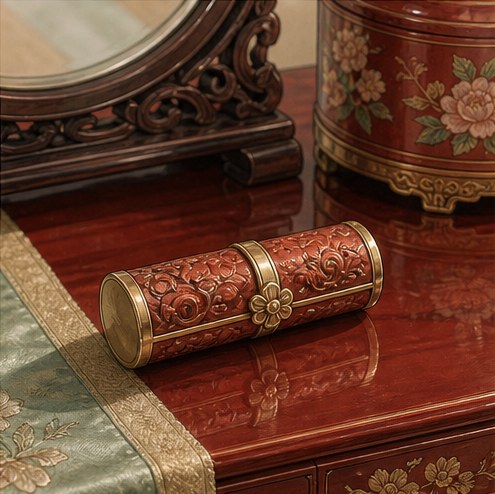
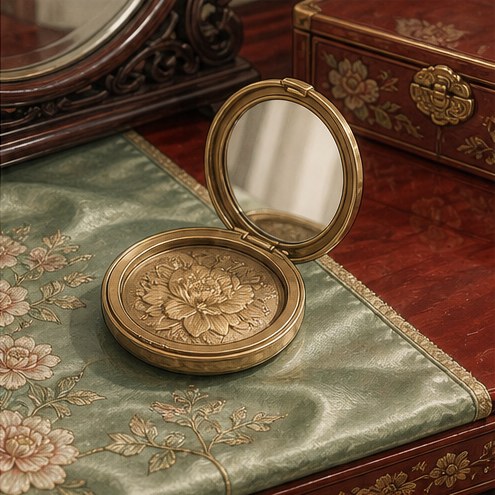
The breakout Chinese products are things you want to hold. Carved relief lipstick cases, engraved compacts, palettes shaped like fans — heritage design applied to cosmetics, part of the wider guochao movement putting traditional Chinese aesthetics on modern goods.
The packaging is not the wrapper. It is a substantial part of what is being sold, and it is where the category is doing work nobody else attempts.
| K-beauty | C-beauty | |
|---|---|---|
| Strongest category | Skincare and sun care | Colour cosmetics and packaging design |
| Core proposition | A repeatable routine | An object worth owning |
| Notable inventions | Cushion compacts, modern essences, light sunscreen textures | Heritage guochao design language, elaborate palette formats |
| How it reached you | Retail — Olive Young, Sephora, Amazon | Social first — Douyin and Xiaohongshu |
| US availability | Everywhere, for a decade | Patchy; mostly Amazon, now entering physical retail |
| Design instinct | Restraint | Ornament |
K-beauty globalised through shelves. Olive Young in Seoul, then Sephora, then Amazon — a physical retail path that made the products ordinary and available. That is why a Korean sunscreen is something an American can buy on a Tuesday without thinking about it.
C-beauty grew up on feeds. Douyin and Xiaohongshu built enormous domestic demand very fast, with product cycles measured in weeks rather than seasons. The result is a category that feels huge online and has been genuinely difficult to buy in the West — which is exactly the gap a national retail partnership closes.
We checked rather than assumed. These Chinese brands return real listings on Amazon US right now:
Three things will tell you whether C-beauty repeats K-beauty’s trajectory or stalls.
Whether it leads with skincare or colour. K-beauty’s beachhead was skincare, because skincare creates repeat purchase and habit. If C-beauty enters on colour — its strength — it wins attention faster and loyalty slower.
Whether the design language survives translation. The heritage aesthetic is the differentiator. Sanded down for Western retail, it becomes ordinary cosmetics with a good story; kept intact, it is genuinely unlike anything on the shelf beside it.
Whether formulas get Western-market versions. Ingredient rules and claim regulations differ, so a product sold in Shanghai is not automatically the product sold in Ohio. Same name does not guarantee same formula — worth checking rather than assuming.
Not a competition you have to resolve. The honest guidance is category-shaped: for sunscreen, hydration and anything you use daily, K-beauty has a decade of iteration and unmatched availability. For colour, and for the pleasure of owning something beautifully made, C-beauty is doing the more interesting work.
Our K-beauty essentials guide covers the Korean routine in depth, and the skincare layering guide explains what order any of this goes in — and which four steps you can skip entirely.
Affiliate disclosure. As an Amazon Associate we earn from qualifying purchases. The brand links above are affiliate links; they cost you nothing extra and never change what we say. No prices appear on this site — they move faster than an article can stay honest about them.
This is a researched explainer. Nothing here was tested on skin by us, and no product is recommended on performance grounds. The brand list records what is purchasable, verified by checking Amazon US directly — not a judgement about which is better.
The Proya and Ulta details are Wall Street Journal reporting, attributed and linked above. We could not access the article directly to verify it independently, so it is presented as their reporting rather than as our own finding.
Illustrations are AI-generated dressing-table scenes. Every object in them is generic and unbranded — no real product, brand or packaging is depicted, and no logos or characters appear anywhere.
“K-beauty” and “C-beauty” are loose market terms, not formal categories, and the generalisations here describe industry tendencies rather than every brand in either country.
Affiliate disclosure. As an Amazon Associate we earn from qualifying purchases. Links here support DopamineKart at no extra cost to you and never change what we recommend.
No prices anywhere on this site — they move faster than an article can stay honest about them.
How we review · Corrections: email us · All Legit reviews