Legit Trend Report
Kitchen Backsplash Trends 2026: What's Actually Worth Doing
Five directions actually showing up in real renovations right now — plus the color palettes, mood boards, and the exact supplies you'd need to do any of them yourself.
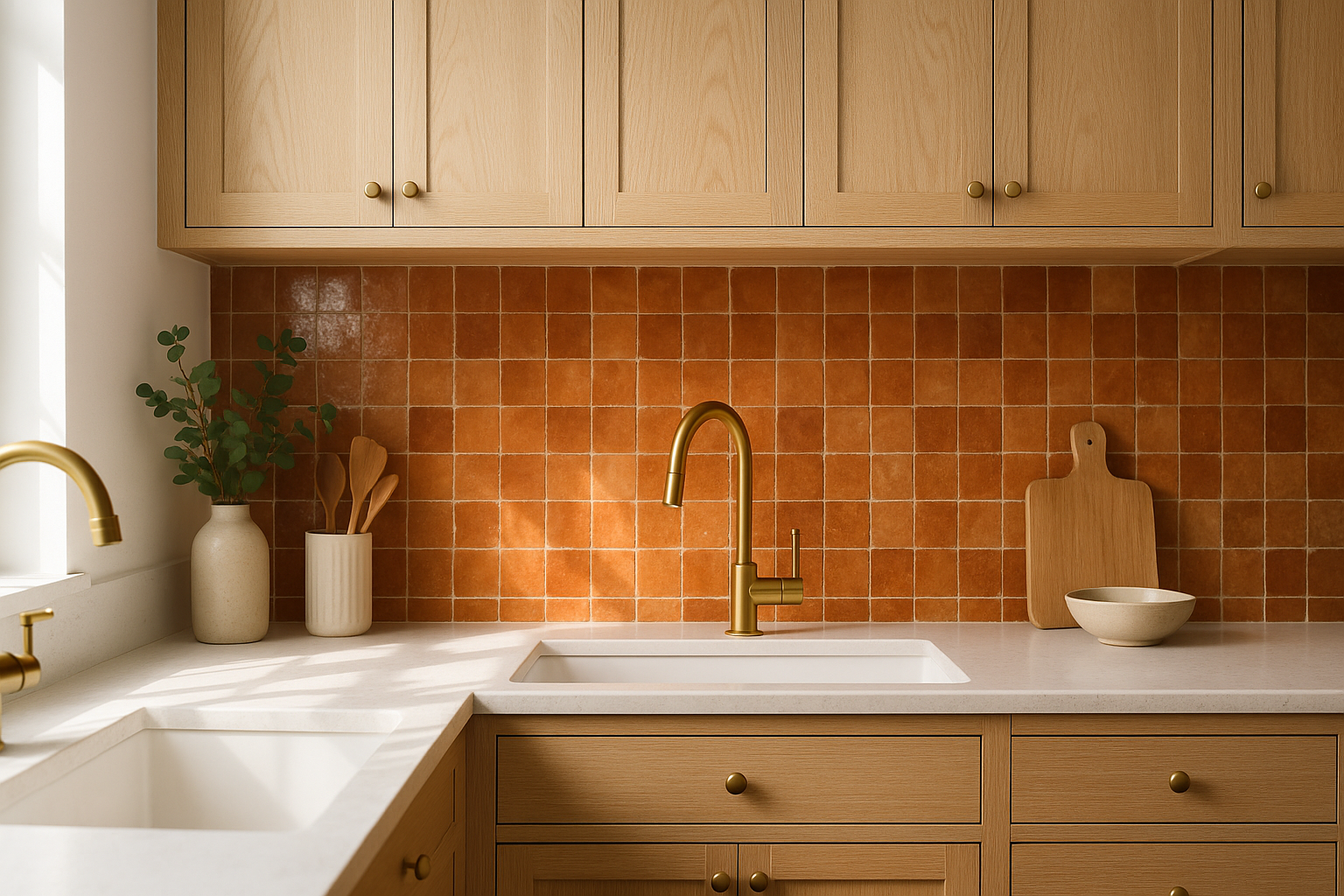
AI-generated concept image — handmade zellige tile in warm terracotta, one of 2026's most-searched backsplash directions.
The Short Version
- Handmade, irregular-glazed tile (zellige-style) has moved from niche to mainstream — the imperfect, light-catching surface is the opposite of the flat subway tile look that dominated the last decade.
- Full-height stone slab backsplashes are the quiet-luxury move: no grout lines, dramatic veining, and a seamless look from counter to upper cabinets.
- Warm, earthy palettes (terracotta, olive, warm cream) and cool coastal palettes (sea glass, chalky white, sand) are the two directions actually competing for attention this year — not gray-and-white minimalism.
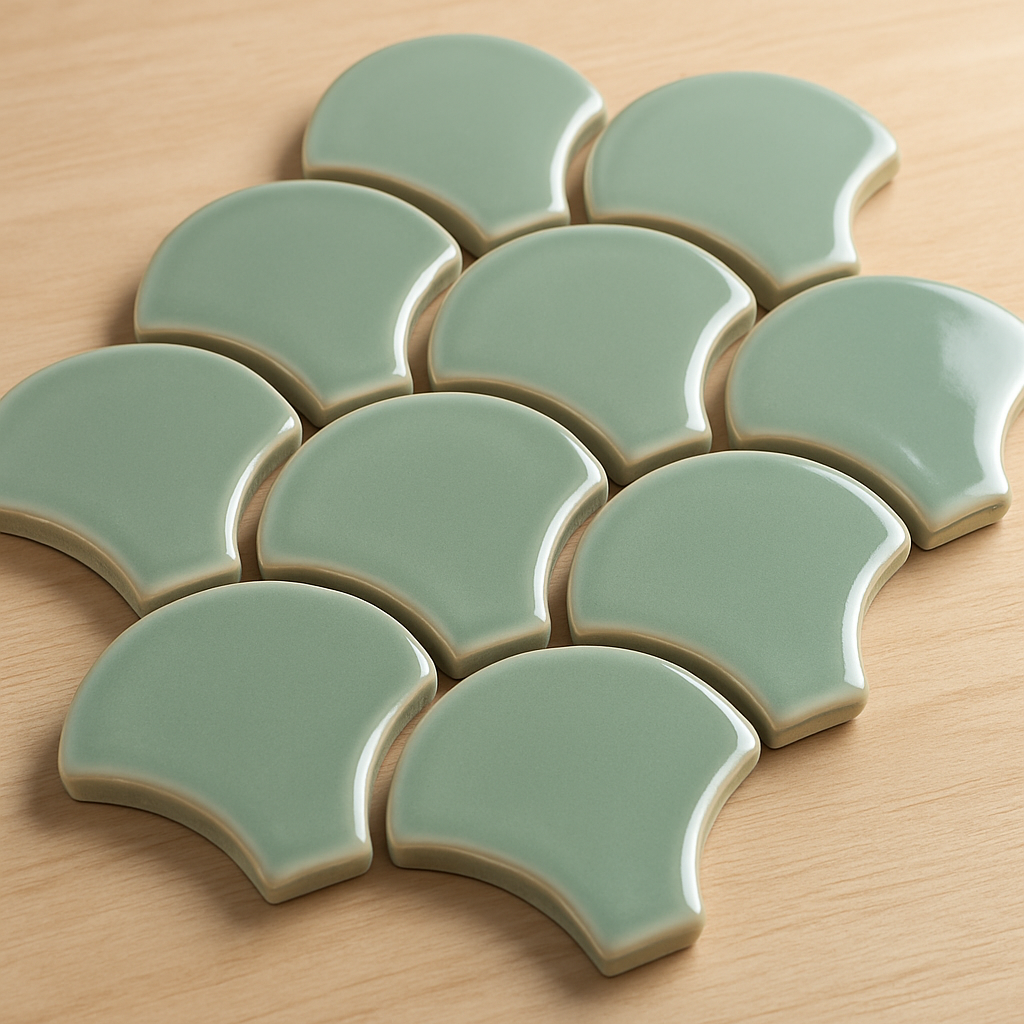
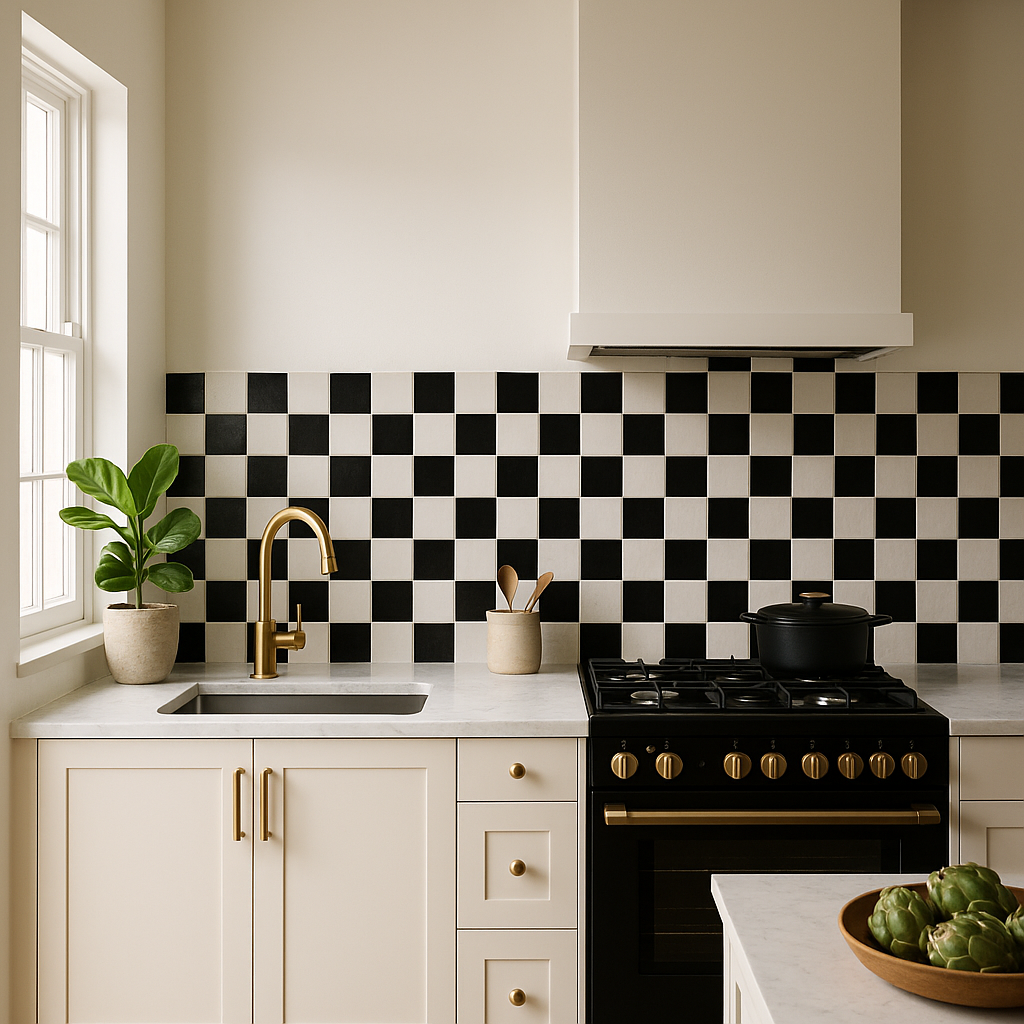
- Checkerboard and scallop shapes are the playful, maximalist counterpoint for kitchens that want a distinct point of view rather than a safe backdrop.
Handmade Zellige-Style Tile
The single most-requested backsplash look right now is the handmade, irregular-glazed tile associated with Moroccan zellige — small square or rectangular tiles with a glossy, slightly uneven glaze that catches light differently across the surface. Unlike a flat subway tile, no two tiles look identical, which is exactly the point: it reads as crafted rather than manufactured.
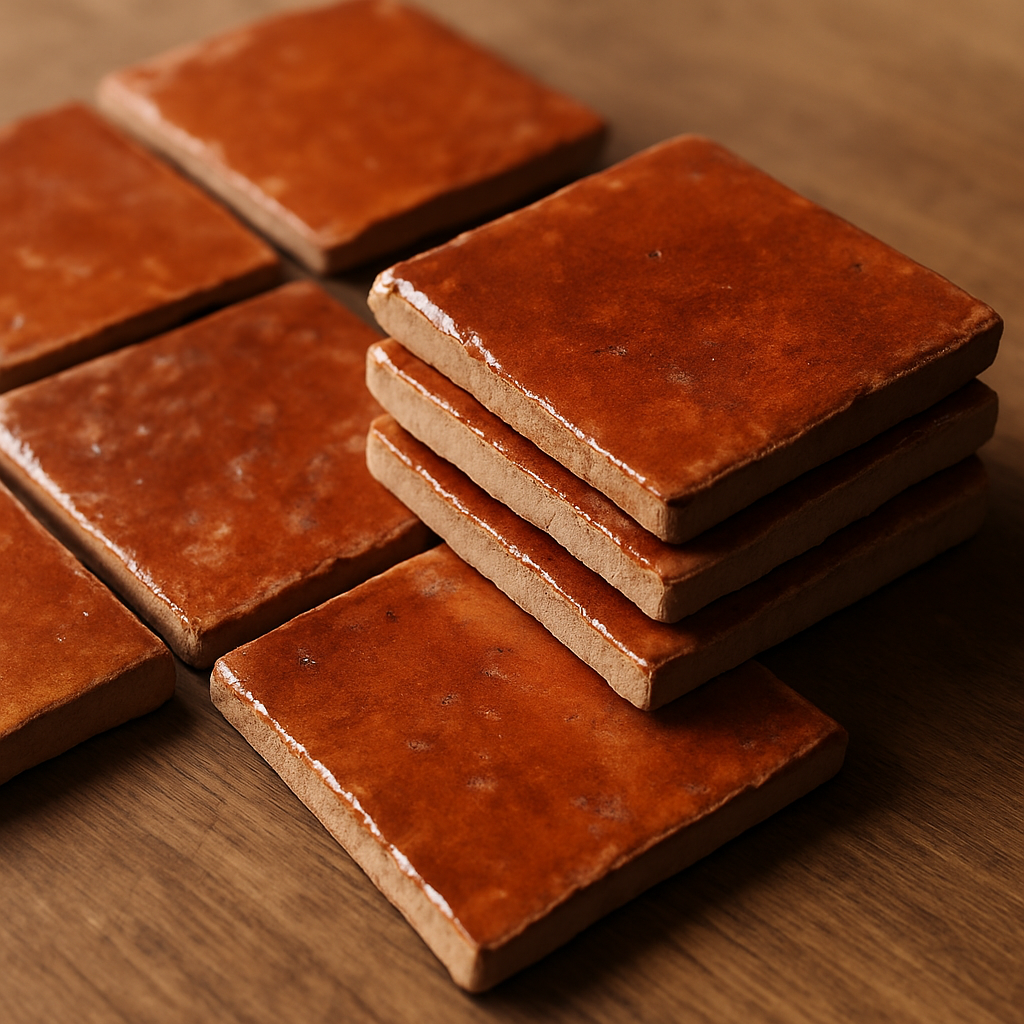
The tradeoff is real: authentic handmade tile costs more per square foot than machine-made ceramic, and the irregular surface makes for a more involved grout job. Machine-made "zellige-look" alternatives exist at a lower cost point but lose some of the glaze variation that makes the real thing distinctive.
Full-Height Stone Slab
Instead of tile, a single slab of stone (or large-format porcelain made to look like stone) runs from the countertop to the upper cabinets, eliminating grout lines entirely. This is the look most associated with "quiet luxury" kitchens — dramatic natural veining doing all the visual work, with nothing else competing for attention.
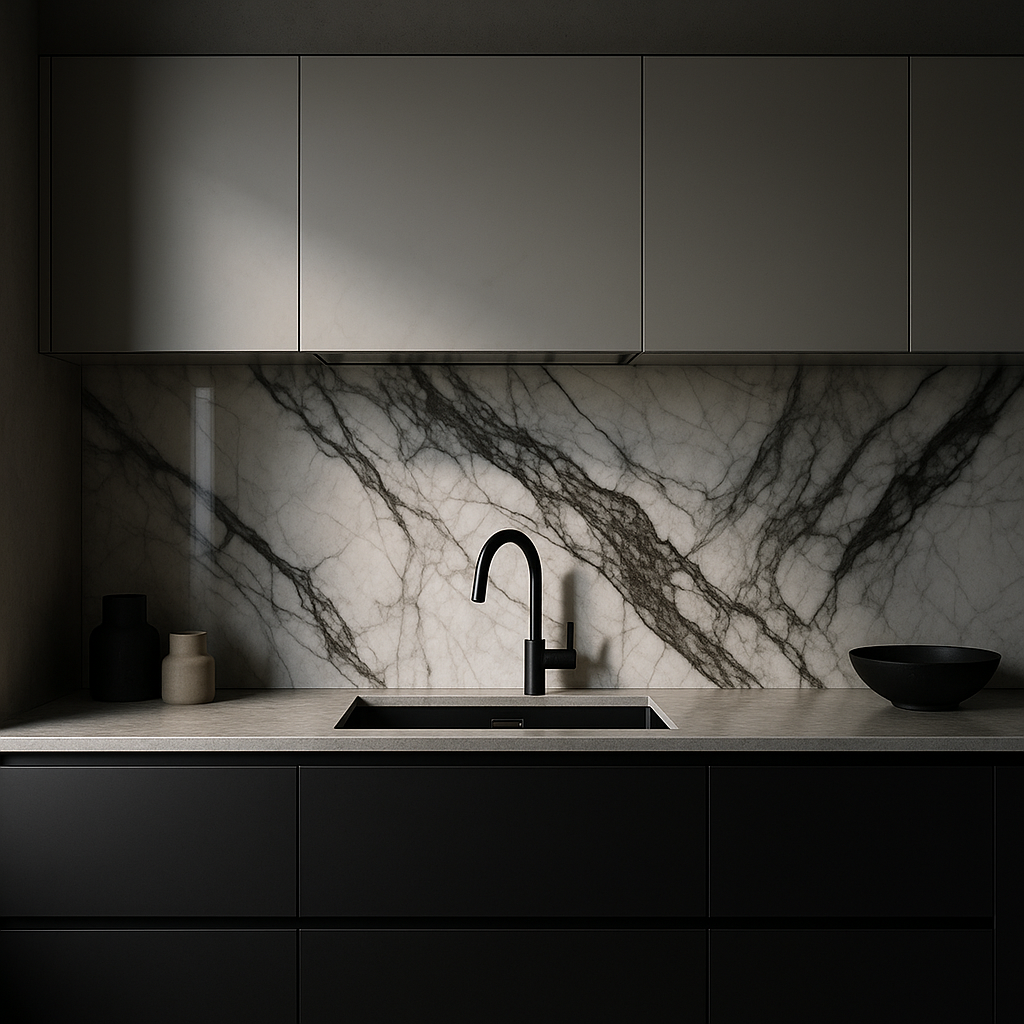
Real marble is porous and needs sealing to resist kitchen splatter and acid from citrus or wine. Large-format porcelain slabs replicate the look with better stain resistance, which is why porcelain "marble-look" slabs have become the practical version of this trend for working kitchens.
Large-Format Warm Grid Tile
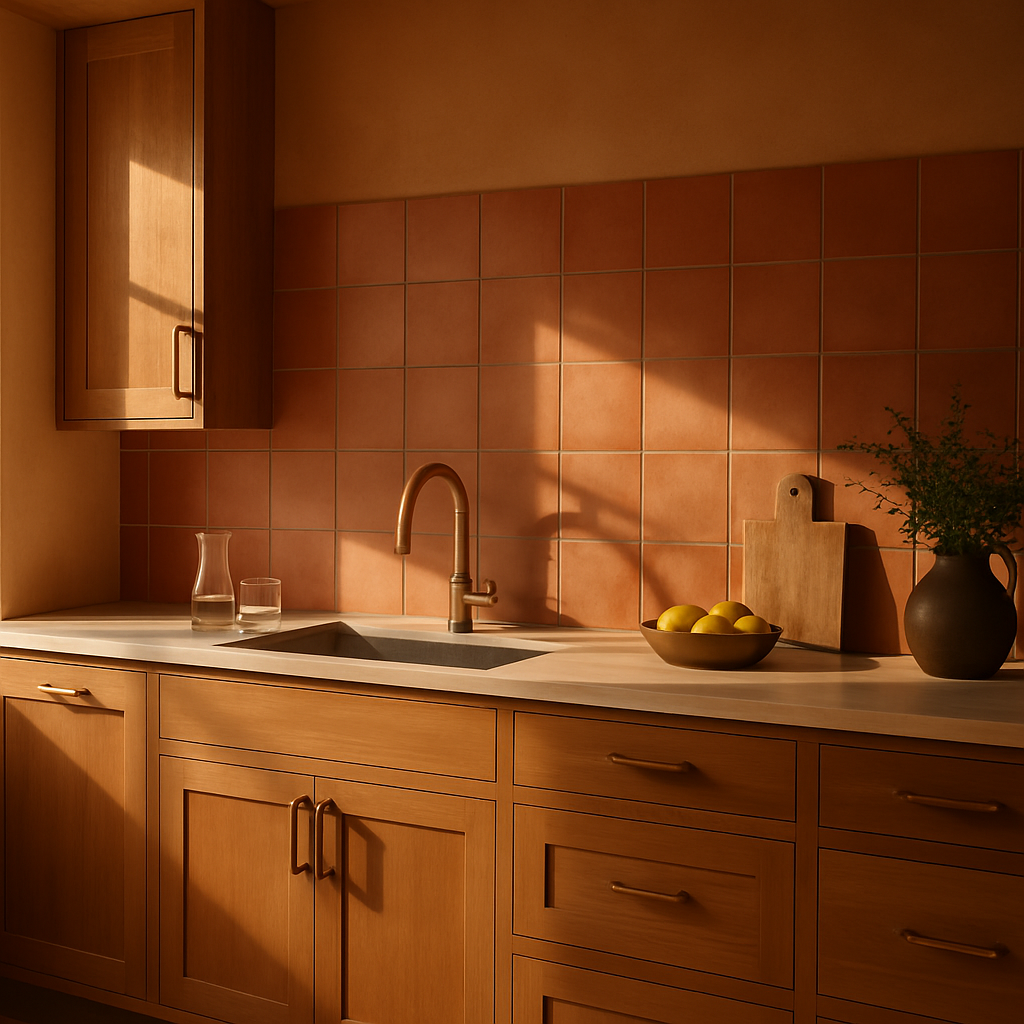
A step down in intensity from a full slab: large-format tile (typically 4x8 or bigger) in a warm matte finish, laid in a simple grid rather than a running-bond or herringbone pattern. Fewer grout lines than small tile, but still reads as tile rather than a single stone surface — a middle-ground choice for kitchens that want warmth without full commitment to either handmade tile or slab.
Scallop / Fish-Scale Shapes
A genuinely playful direction: tile cut into scalloped or fish-scale shapes, arranged in overlapping rows. It's a maximalist choice compared to the other four trends here, and it works best as an accent — a range hood surround or a small feature wall — rather than covering an entire kitchen.
Checkerboard
A graphic, high-contrast pattern — most often black and white, though color pairings are showing up too — that reads as intentional and a little retro without being a full throwback kitchen. It's a strong choice for a kitchen that wants a clear point of view rather than a neutral backdrop.
Two Palettes Actually Competing This Year
Most 2026 kitchen backsplash choices land in one of two color directions. Neither is "safe gray-and-white" — that era of kitchen design has clearly passed.
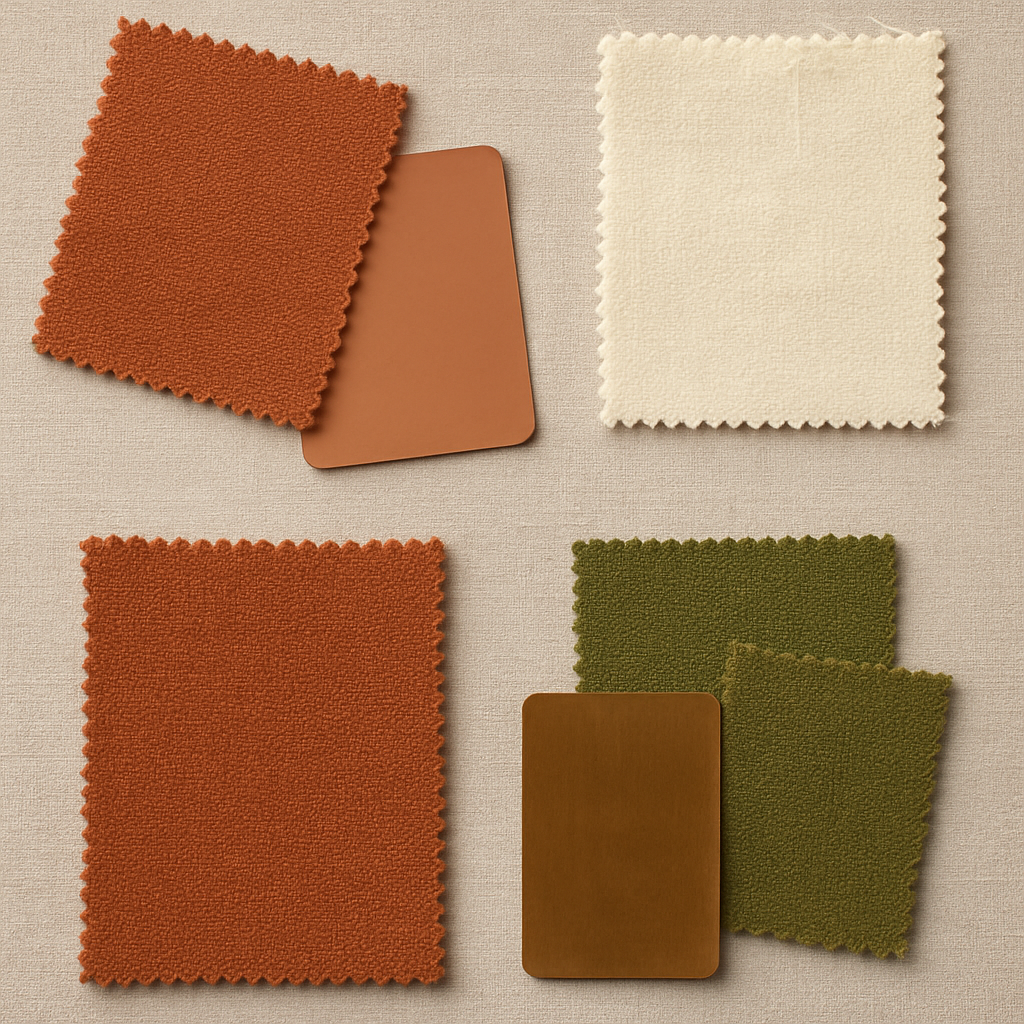
Earthy & warm: terracotta, clay, warm cream, olive green, and burnished brass. This pairs naturally with the zellige and large-format grid trends above, and works especially well with white oak cabinetry and brass or unlacquered brass hardware.
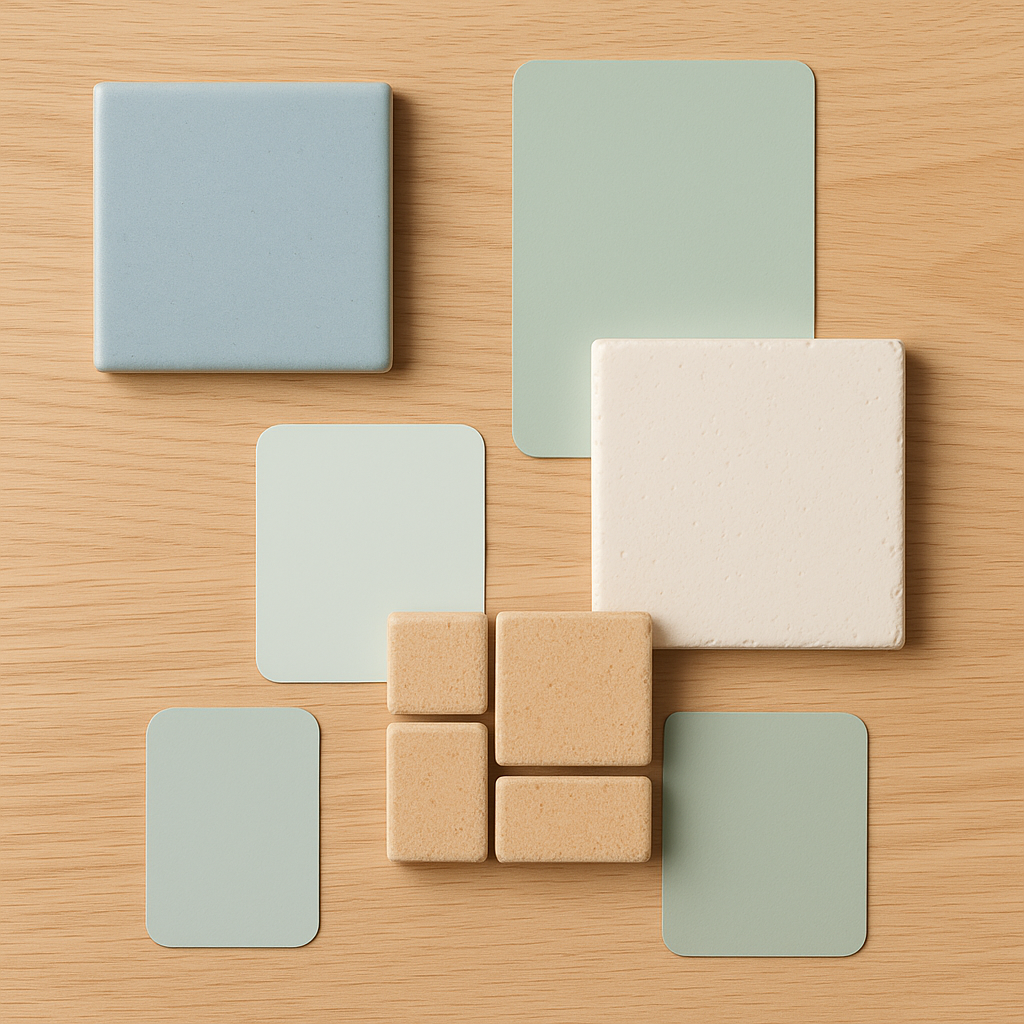
Cool & coastal: soft blue, sea glass green, chalky white, and warm sand. A gentler, more relaxed palette that pairs well with painted cabinetry (Shaker-style especially) and nickel or unlacquered brass fixtures.
Which Trend Fits Which Kitchen
| Trend | Best For | Skill Level |
|---|---|---|
| Zellige-style | Character-driven, warm kitchens | Intermediate–Pro (irregular grout lines) |
| Full-height slab | Minimalist, "quiet luxury" kitchens | Pro install recommended |
| Large-format grid | Warm but low-fuss kitchens | Confident DIY |
| Scallop | Accent walls, range hoods | Intermediate (more cuts) |
| Checkerboard | Graphic, statement kitchens | Intermediate (precise layout) |
What You'd Actually Need to Do This Yourself
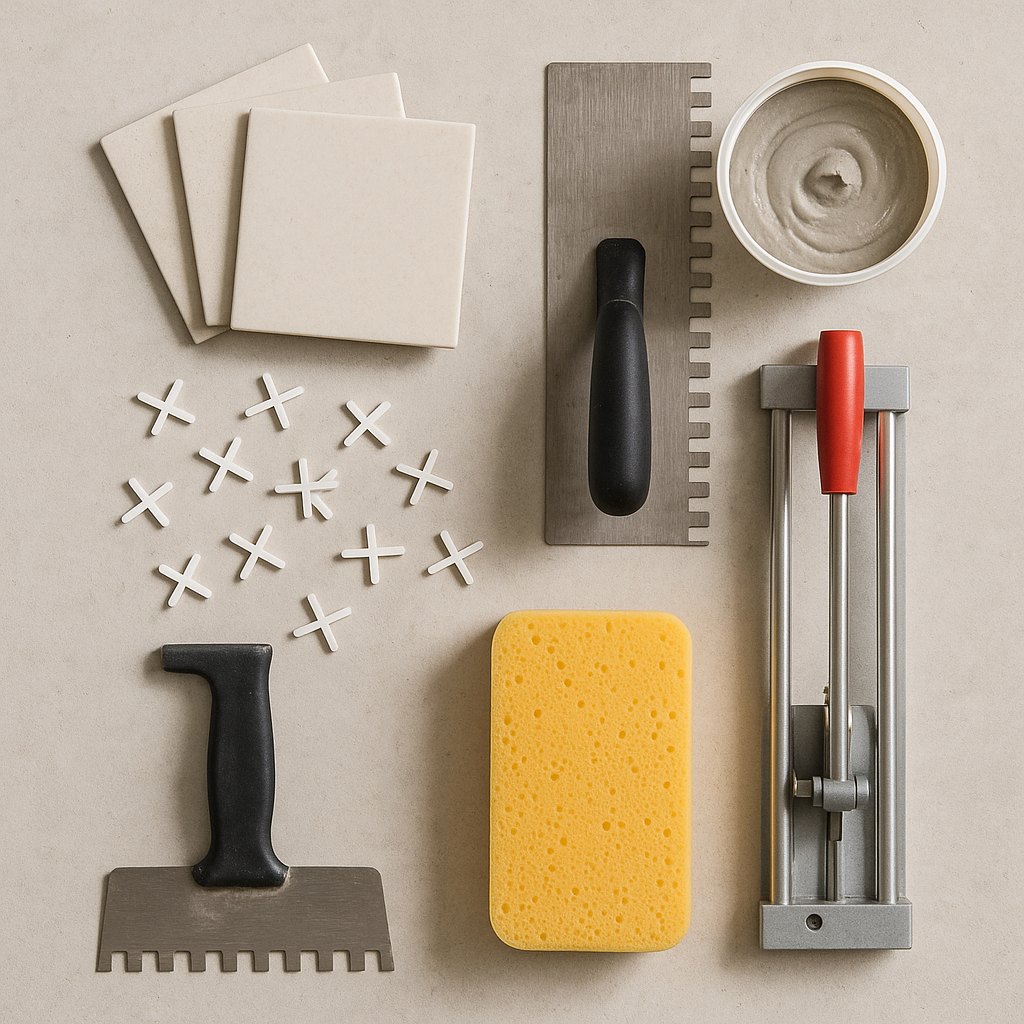
Core Toolkit for a DIY Backsplash
- Tile of your chosen style — order 10% extra to cover cuts and breakage.
- Notched trowel — notch size depends on tile size; check the tile manufacturer's spec sheet.
- Tile spacers — sized to your grout line preference (1/16" for zellige-style, up to 1/8" for large-format).
- Wet tile saw or manual tile cutter — a wet saw is worth renting for anything beyond a few straight cuts.
- Thinset mortar — the adhesive layer between the wall and tile; formulation varies by tile material.
- Grout — sanded for wider joints, unsanded for tight joints like zellige-style tile.
- Grout float and sponge — for applying and cleaning grout without damaging the glaze.
- Level and tile spacers/wedges — keeping rows straight matters more on a visible backsplash than almost anywhere else in a home.
For anything involving natural stone slab or extensive tile cuts (scallop, checkerboard with tight tolerances), most homeowners bring in a professional installer rather than DIYing — the material cost of a mistake is high enough that labor cost often pencils out favorably.
Ready to install? See our step-by-step How to Install Tile guide for the full sequence — prep, layout, thinset, setting, cutting, curing, grouting, and sealing.
Frequently Asked Questions
Is zellige tile more expensive than regular ceramic subway tile?
Generally yes — authentic handmade zellige costs more per square foot than machine-made ceramic subway tile, both because of the labor-intensive production process and because more waste occurs during cutting due to the irregular shapes.
Can I install a stone slab backsplash myself?
It's possible but genuinely difficult — slabs are heavy, need precise cuts around outlets and windows, and a mistake means replacing an expensive piece of material. Most homeowners hire a professional for slab installation specifically.
What grout line size should I use for a large-format tile grid?
This varies by manufacturer and tile size, but large-format tile commonly uses 1/16" to 1/8" grout lines — check the specific tile's installation guidelines, since some large-format tiles require wider joints to accommodate size variation.
Do I need special tools for scalloped or fish-scale tile?
You'll likely need more precise cutting than a standard grid layout, since scalloped tiles require curved or angled cuts at edges and corners. A wet tile saw with a fine blade makes this significantly easier than a manual cutter.
This article contains no affiliate links and no buy buttons. All imagery is AI-generated concept photography meant to illustrate design directions, not photographs of a specific real installation or product. Installation guidance is general — always confirm specifications with your chosen tile manufacturer and, for structural or waterproofing questions, consult a licensed contractor.