The dream is not a machine that performs one chore. It is a home that notices the small burdens accumulating around you—and quietly gives your attention back.
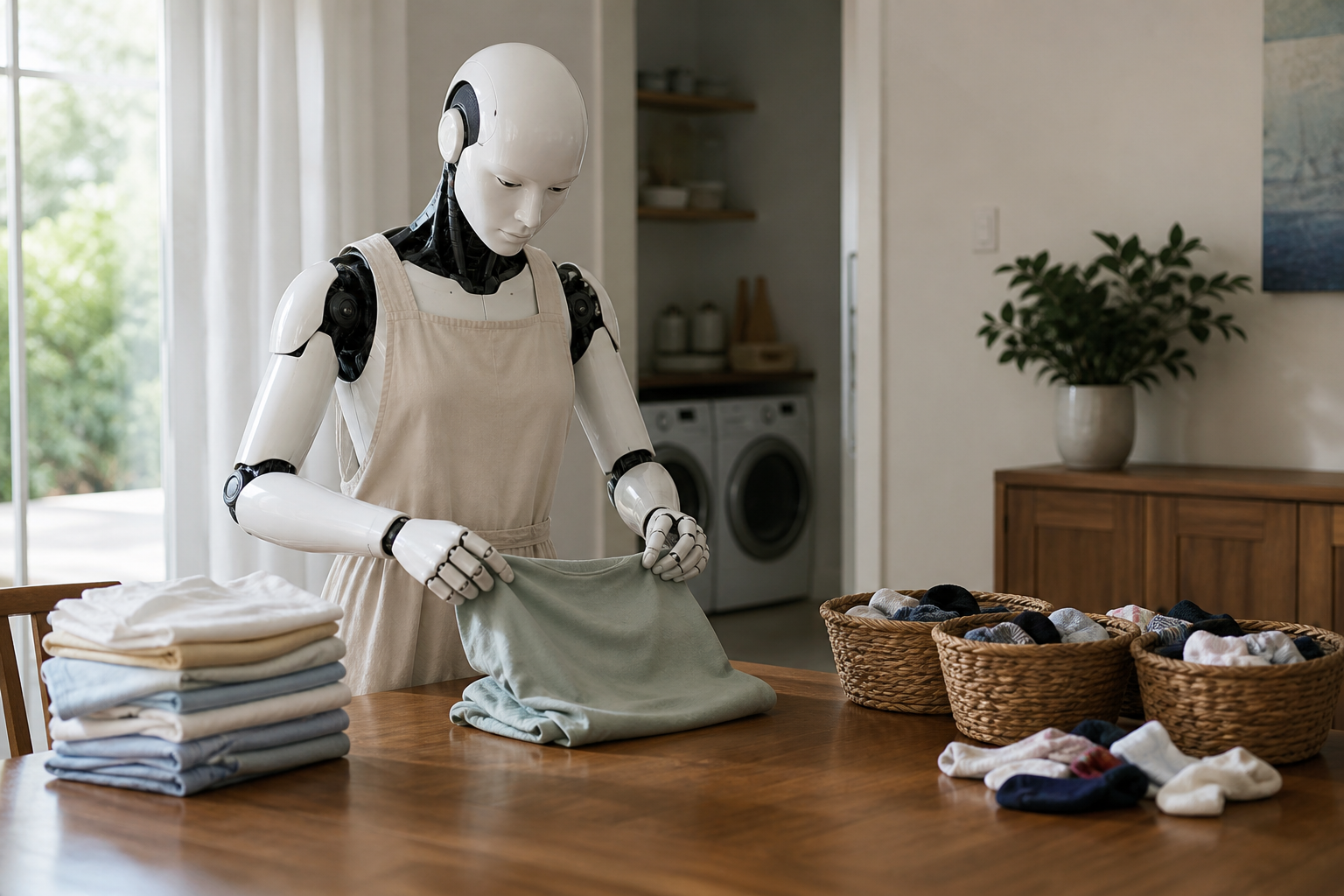
Clean clothes would become finished clothes
Today, “doing laundry” is a chain of separate jobs: sorting, washing, drying, carrying, folding and putting away. Automation usually stops after the drum spins. The aspirational servant closes the loop.
It learns where every towel belongs, which shirts should hang, whose socks are whose and which sweater must never see the dryer. The breakthrough is not folding speed. It is remembering the household well enough that a clean pile never becomes furniture.
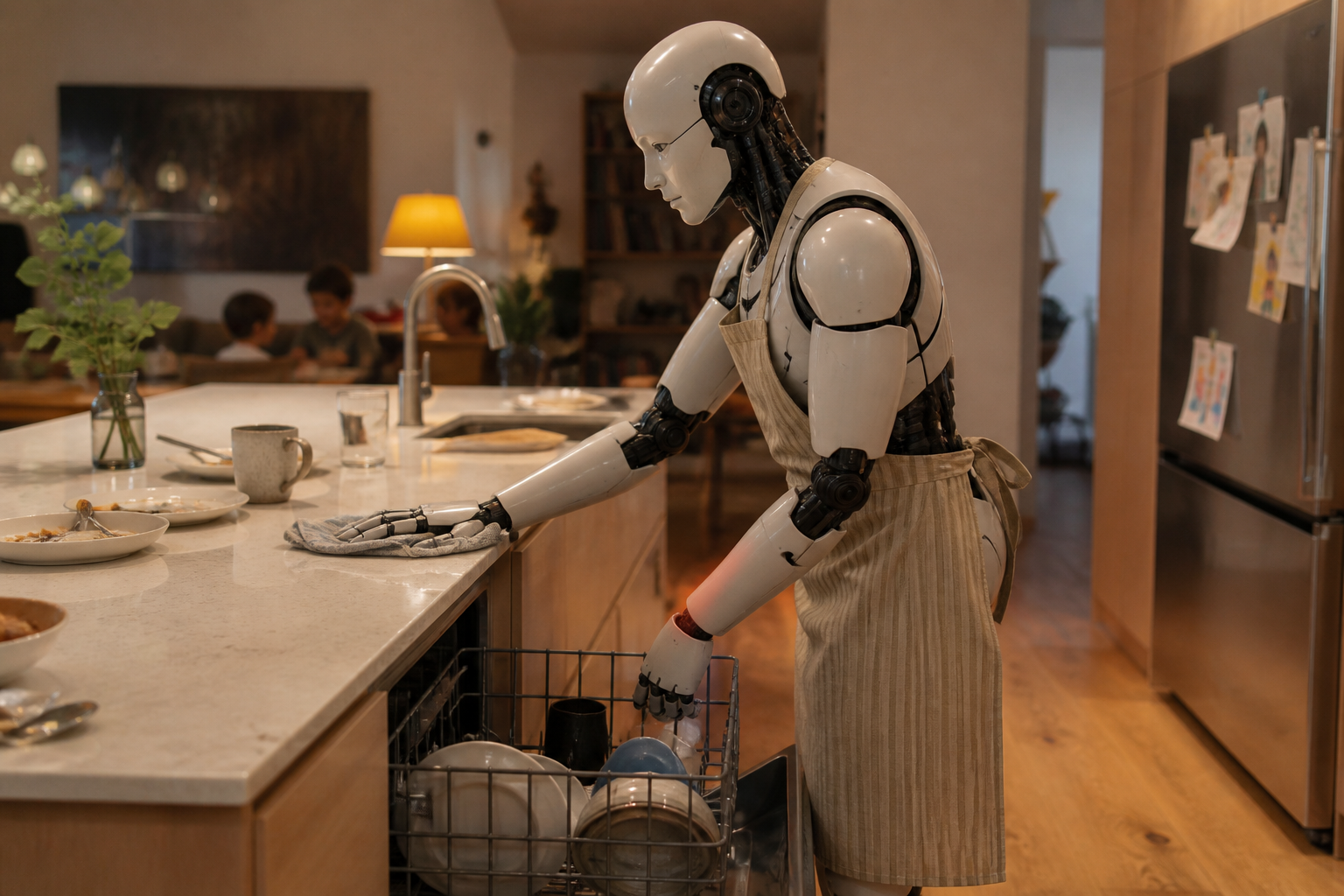
Dinner could end when dinner ends
Imagine leaving the table without mentally scheduling the plates for later. The servant clears, scrapes, loads, wipes and puts away. It notices the pan that needs soaking and the cup that cannot go in the dishwasher.
This is more ambitious than a countertop gadget because kitchens are messy, irregular environments. The value is not mechanical perfection. It is waking up to an empty sink and a clear counter without somebody in the family having donated the final half-hour of the night.
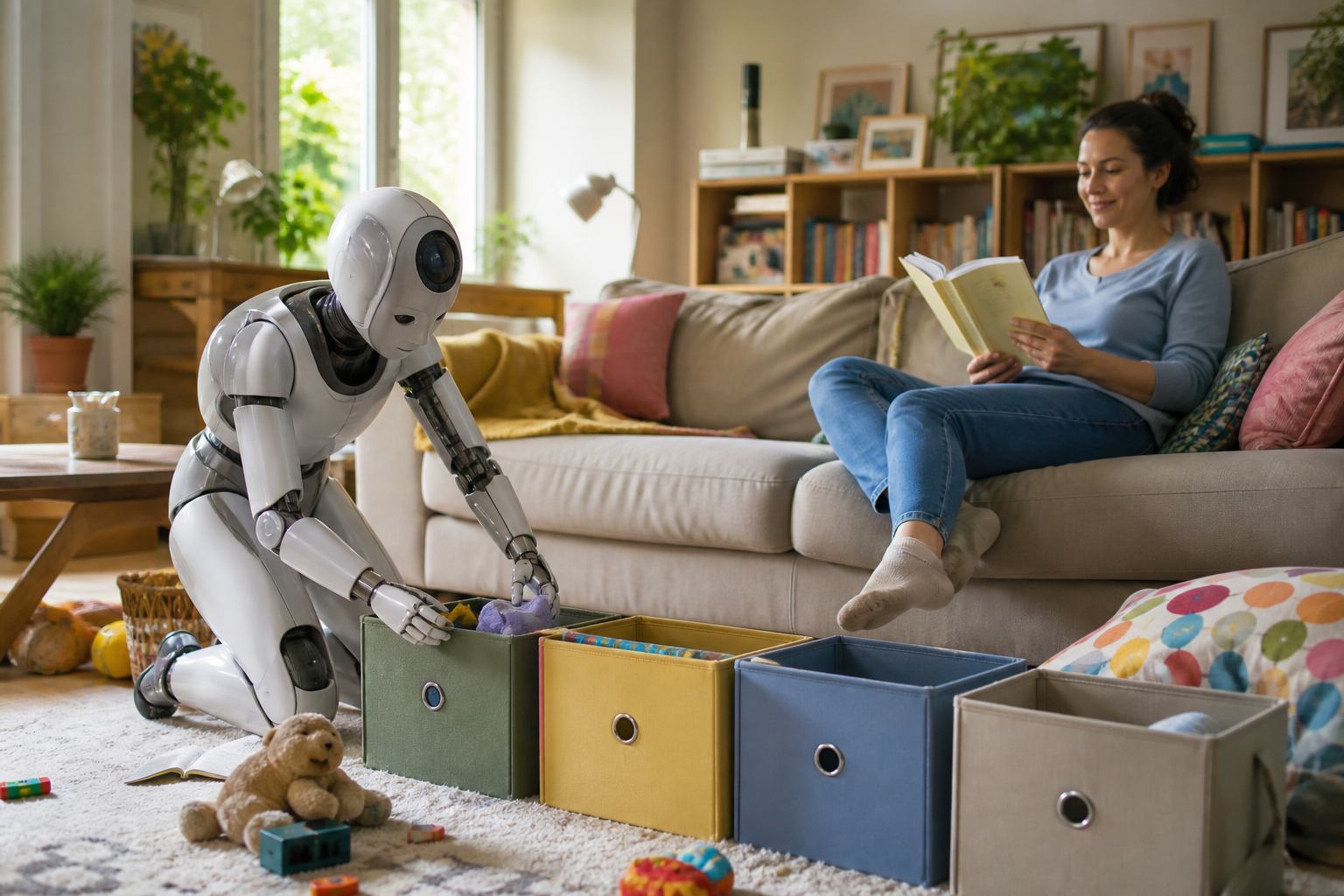
Tidying becomes background maintenance
A lived-in home is never motionless. Shoes migrate. Packages arrive. Toys explode across the floor. The future servant does not make the house look unoccupied; it returns things to a useful baseline.
It could distinguish a current project from abandoned clutter, gather tomorrow's school items by the door and leave the blanket fort intact because someone still cares about it. Real intelligence here means knowing what not to clean up.
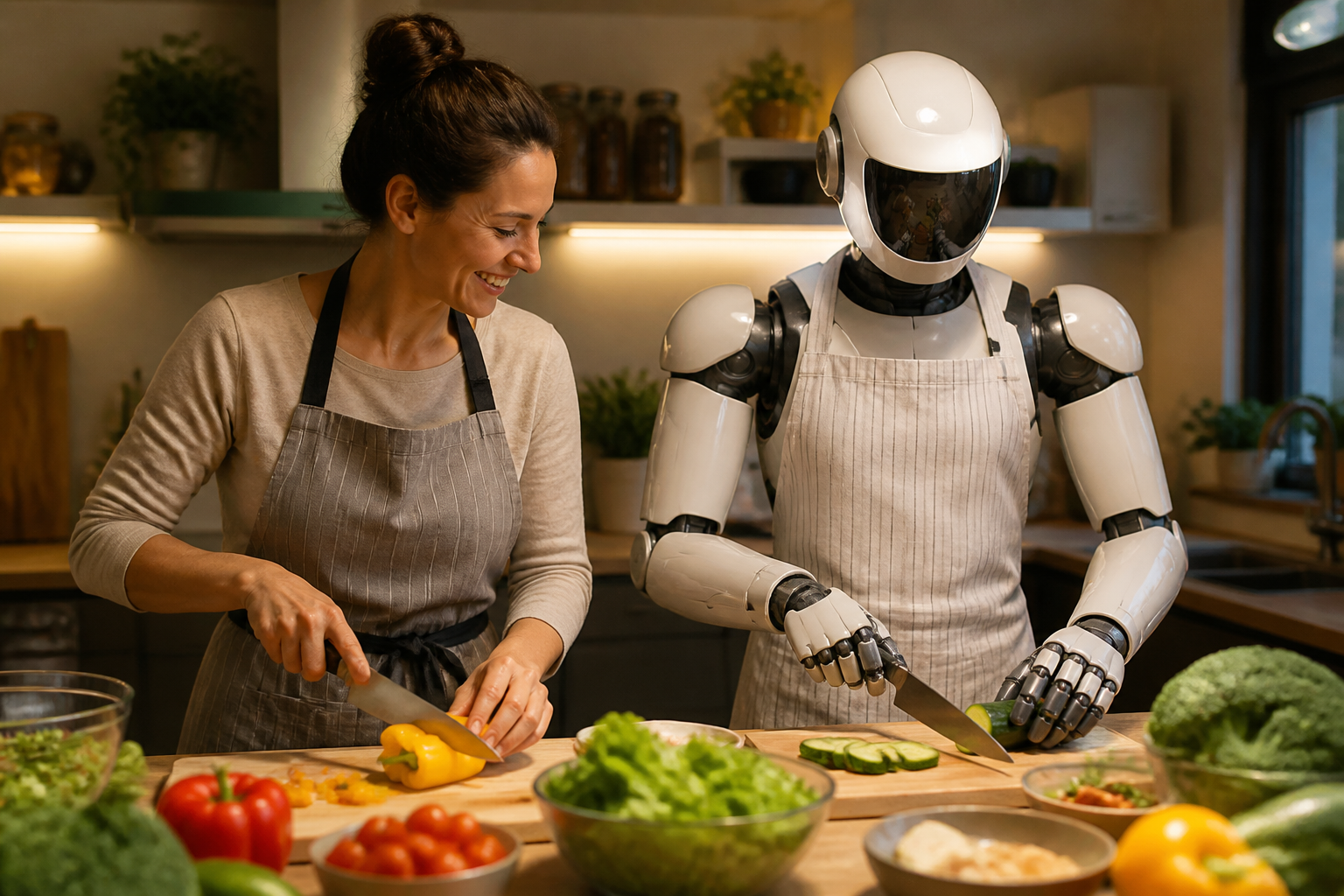
Meal prep becomes something you share
The best version does not banish people from the kitchen. It handles the repetitive preparation—the washing, chopping, measuring and cleanup—while leaving room for taste, conversation and improvisation.
You might make the sauce while it preps vegetables. A child might still shape the dough. The servant's role is to remove friction, not personality. Convenience becomes dangerous only when it edits the human moments out along with the chores.
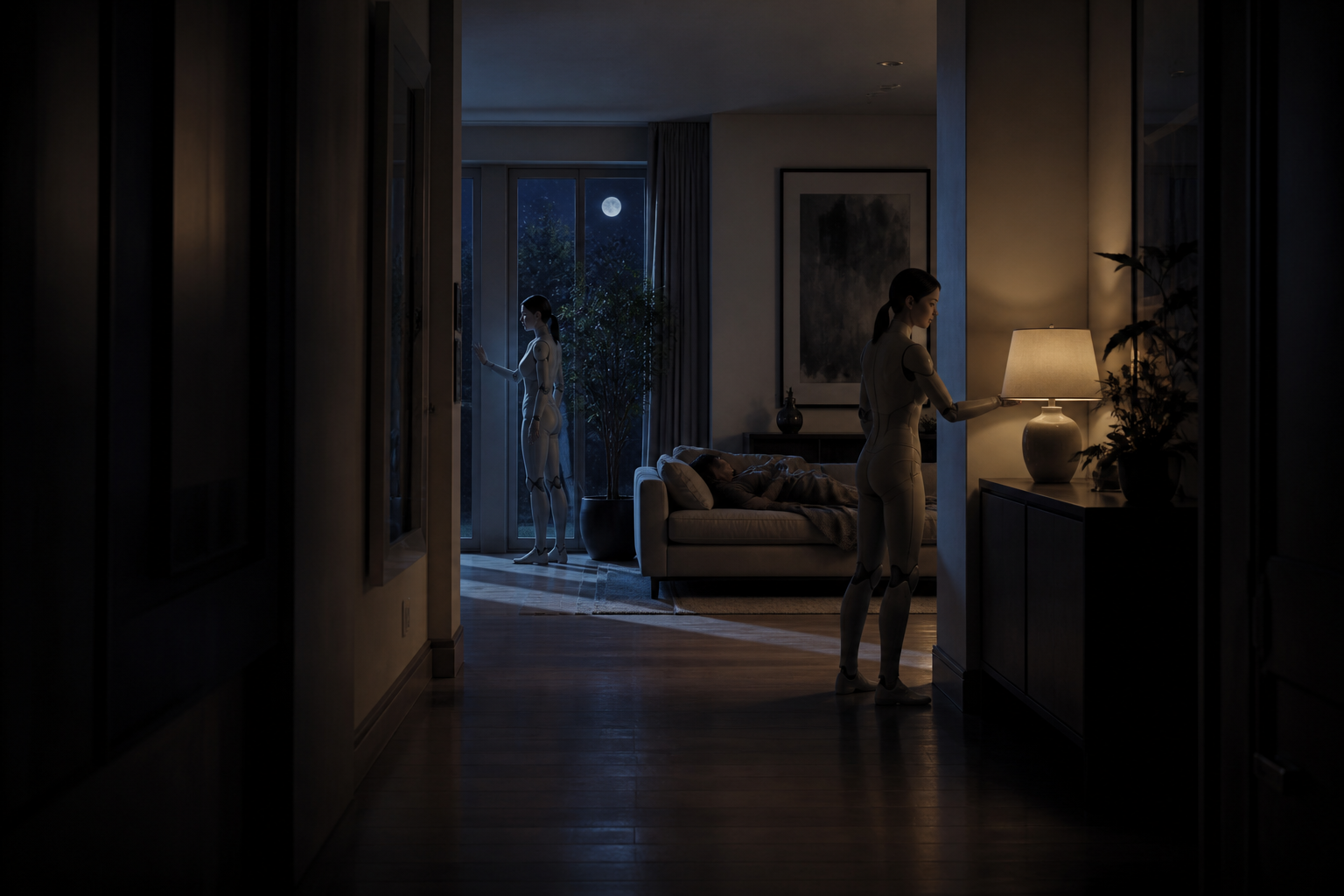
The house closes itself down
At night, the servant performs the routine everybody remembers only after getting into bed: lock the door, check the window, turn off the lamp, move tomorrow's laundry, confirm the stove is cold.
The aspiration is calm, not surveillance. A trustworthy system would make its actions visible, keep private activity inside the home and ask before changing anything consequential. The perfect servant should reduce vigilance—not become another thing the household must watch.
Trust would matter more than intelligence.
What this future should remove
The endless reset. The invisible second shift. The physical strain of bending, carrying and standing. The low-level guilt of seeing five unfinished chores from every room.
What it should never remove
Agency. Privacy. Family rituals. The right to leave a project messy. The dignity of workers. The knowledge required to care for ourselves when the machine is unavailable.
The fantasy is not spotless perfection. It is a home where maintenance no longer consumes the people who live there.