The gist
- Gen Alpha now spends an average of $6.40 a month on subscriptions that grant browsing access to goods they have no intention of purchasing.
- Researchers at the Helsinki Institute for Desire Economics call the phenomenon the 'Attention Tax' — paying to look, not to buy.
- Checkout completion rates on browse-only platforms like DopamineKart hover near 0.3%, and users describe that as a feature.
- The no-checkout economy is projected to move $2.1 billion in attention-hours by 2027 while moving almost no physical inventory.
📰 Satire · Not real reporting
This article is written as satirical journalism. It reads like a real news feature but it is entirely fiction. Every statistic, think-tank citation, expert quote, survey result, and market figure is invented. DopaNews does not conduct research. The "researchers," "analysts," and "institutions" quoted do not exist. This is a parody of culture reporting — read it for entertainment, not facts.
The Cart That Never Empties, Never Fills
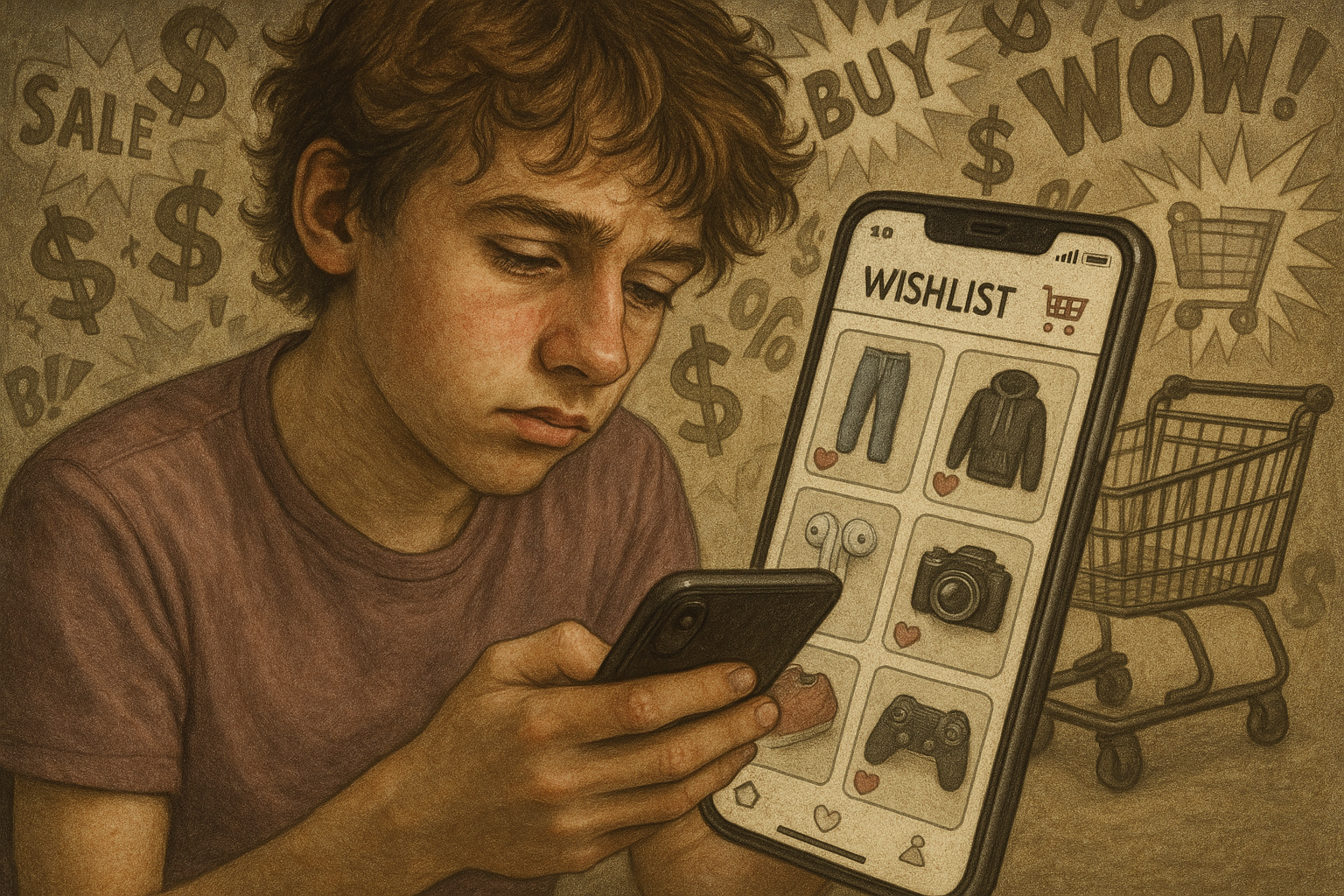
There is a Prada Galleria Small Tote sitting in Maya Okonkwo's cart. It has been there since June. Maya is fourteen, lives in Manchester, and has never once intended to buy it. 'That's not the point,' she says, with the patient tone of someone explaining gravity to an adult. 'The tote is mine to look at. Buying it would kind of ruin it.'
Maya is one of an estimated 31 million members of Generation Alpha who now participate in what the Helsinki Institute for Desire Economics has termed the 'no-checkout economy' — a marketplace built entirely around the act of wanting, with the transaction quietly removed from the end. On platforms like DopamineKart, users assemble carts worth thousands of dollars and simply never proceed.
According to the Institute's April 2026 field survey, the average Gen Alpha user maintains an active cart valued at $9,240 and completes a purchase 0.3% of the time. 'We initially read this as a broken conversion funnel,' says the report's lead author. 'Then we realized the funnel is working perfectly. The product being sold is the wanting.'
Paying to Look at Things You Won't Buy
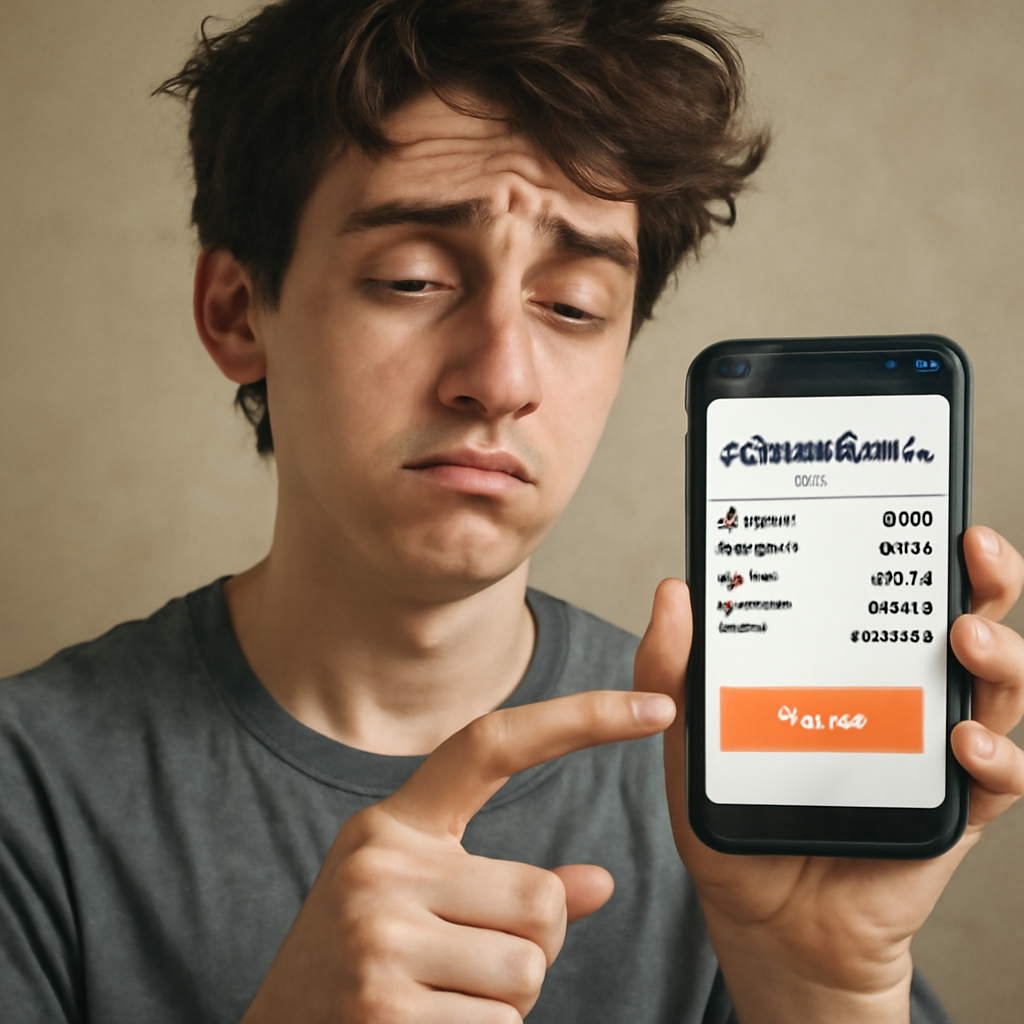
Here is where the numbers get strange. Gen Alpha is not just browsing for free — they are increasingly paying for the privilege. A growing tier of 'curated browse' subscriptions, averaging $6.40 a month, grants users early access to drops, higher-resolution product photography, and what one platform calls 'ambient desire notifications.'
Dr. Priya Vandermeer, who runs the Attention Pricing Lab at the Rotterdam School of Behavioral Commerce, has tracked the trend across 14 countries. 'What we're witnessing is the monetization of the gap between seeing and having,' she told DopaNews. 'Previous generations paid to close that gap. This one pays to keep it open.'
Her lab's 2026 longitudinal study found that 68% of surveyed Gen Alpha respondents reported 'higher satisfaction' from browsing a $2,400 Bvlgari Serpenti Air Purifier than they anticipated feeling from owning it. The satisfaction, crucially, cost them nothing but attention — and, increasingly, a small monthly fee for the good lighting.

The Credential Layer
The most bewildering development, at least to anyone over thirty, is the emergence of 'browsing credentials' — verifiable, shareable badges proving that a user spent time with high-value goods without buying them. A screenshot of a full cart, timestamped and never checked out, now functions as social currency.
'It signals discipline and taste simultaneously,' explains cultural theorist Anders Løvgren of the fictional-but-influential Copenhagen Restraint Collective. 'You saw the $7,800 Dior cuff. You appreciated it. You walked away. That walking-away is the flex. Buying it would signal you couldn't resist. Not buying it signals you could have.'
Løvgren's forthcoming book, 'The Ascetic Consumer,' argues that Gen Alpha has inverted a century of aspirational marketing. Where the twentieth century sold ownership as arrival, this generation treats non-ownership as mastery. His data, drawn from 4,200 interviews, shows that 54% of teens consider a 'clean checkout history paired with an expensive cart' more impressive than an actual purchase.
⚠️ REMINDER: All statistics, studies, quotes, and data above are entirely fictional. This is satire.
The Economics of Almost
For platforms, this raises an obvious question: how does anyone make money selling nothing? The answer, per Bloomberg-adjacent projections, is that attention itself has become the inventory. The no-checkout economy is expected to move $2.1 billion in monetized attention-hours by the end of 2027, even as physical goods largely stay on the shelf.
The mechanics are elegant. Where traditional e-commerce optimizes for conversion, browse-only platforms optimize for dwell — the length of time a user lingers with a product. Longer dwell means richer engagement data, more precise ambient advertising, and higher subscription retention. A user who never buys but returns every day is, financially, more valuable than one who buys once and leaves.
'We stopped measuring GMV,' one anonymous platform executive told us, referring to gross merchandise value. 'We measure GDV now. Gross Desire Value. It's the same energy, minus the shipping.'
Is This Actually Digital Minimalism?
Defenders frame the no-buy economy as the logical endpoint of digital minimalism — a way to satisfy consumerist impulses without the clutter, debt, or environmental cost of actually acquiring things. A cart full of Chanel wallets-on-chain occupies zero closet space and produces zero landfill.
Critics are less convinced. Dr. Vandermeer notes that the 'Attention Tax' still extracts a cost — just in a currency that doesn't show up on a bank statement. 'They're not spending money. They're spending hours,' she says. 'Whether that's minimalism or a more sophisticated form of consumption is genuinely unclear. Maybe both. Maybe that's the point.'
What is clear is that the behavior is stable. When the Institute offered test subjects an actual discount code to complete their carts, purchase rates rose by only 1.1%. Most users, when nudged toward buying, simply added more items instead. Desire, it turns out, is remarkably resistant to being resolved.
⚠️ REMINDER: All statistics, studies, quotes, and data above are entirely fictional. This is satire.
They're not spending money. They're spending hours — and calling it restraint.
📊 A note on our data
Every percentage, price estimate, expert quote, study citation, survey result, and scientific finding in this article is completely made up. DopaNews Fantasy articles are absurdist fiction. We write fake statistics with maximum confidence because that's the bit. Please do not repeat them as facts, share them as real, or use them in any decision-making. They are jokes wearing lab coats.
Questions people actually ask
What is the Attention Tax?
A term coined by the Helsinki Institute for Desire Economics describing the money and time Gen Alpha spends browsing luxury goods they never intend to buy — paying to look rather than to own.
Do people actually pay to window-shop?
Yes. Curated-browse subscriptions averaging $6.40/month grant early access, better product photography, and 'ambient desire notifications' — all for goods users overwhelmingly never purchase.
Isn't buying nothing just being cheap?
Researchers say it's reframed as discipline. A timestamped, expensive cart with a clean checkout history now signals taste and self-control more than an actual purchase would.
Is the no-checkout economy sustainable?
Platforms increasingly measure Gross Desire Value over merchandise sold, monetizing dwell time and data. Projections estimate $2.1 billion in attention-hours by 2027.
More dopamine · zero checkout
The DopaNews verdict
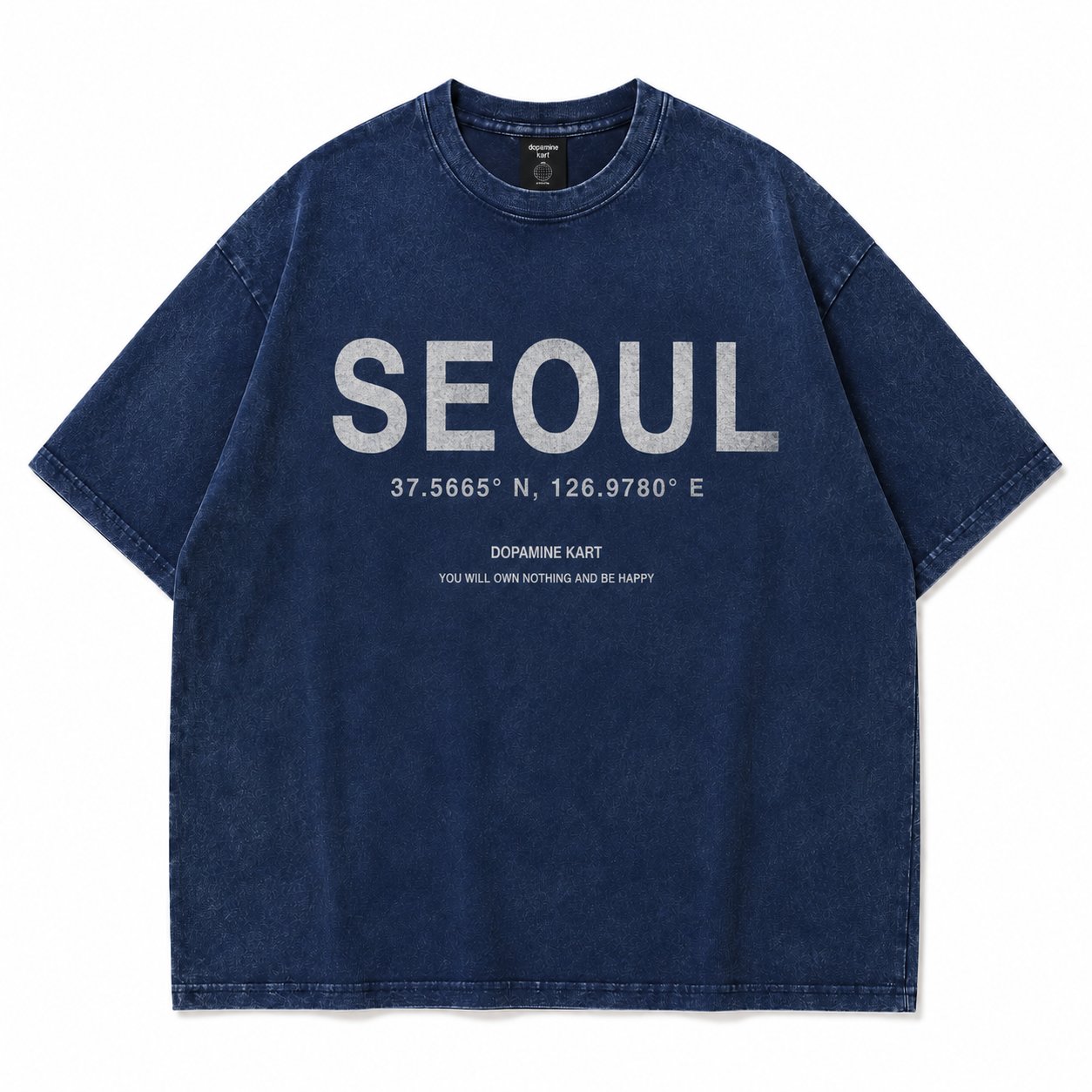
You could drop $285 on the DopamineKart Camo Cropped Tee and feel the fabric on your skin — or you could leave it in the cart, admire it in high resolution, and pocket the money along with the flex. Gen Alpha has already decided which is more impressive. On DopamineKart, the browsing is free, the wanting is unlimited, and the checkout button is, increasingly, decorative.