NOSTALGIA · LEGIT ARCHIVE
Blockbuster
Blockbuster
vs. Hollywood
Video
Tuesday, not Friday. Five days, not two.
▣ LEGIT ARCHIVE · REAL RIVALRY
Tuesday, not Friday. Five days, not two.
▣ LEGIT ARCHIVE · REAL RIVALRY
New releases never dropped on a Friday — Tuesday was the release day for the entire rental-chain era, every week, at every store. And the real gap between the two biggest chains wasn't a looser late-fee policy. It was how long you got to keep the movie before it was even due.
The story people tell is "Hollywood Video gave you a week before fees, Blockbuster only gave you two days." That's not quite it. Neither chain forgave lateness. What actually differed was the rental window itself: Blockbuster's new releases were a one- or two-night rental; Hollywood Video's ran a widely-advertised five days.
Tuesday, always
Distributors shipped new titles Monday afternoon — every store, same overnight window, no exceptions.
Five days, not two
Hollywood Video's real edge was rental-window length, not a late-fee grace period.
Same ending
Both chains were effectively gone within months of each other in 2010 — streaming beat them both.

Blockbuster and Hollywood Video ran the same Tuesday, the same candy aisle, the same drop-box by the door — but genuinely different rules on how long you got to keep what you rented.
CORRECTED, NOT INVENTED.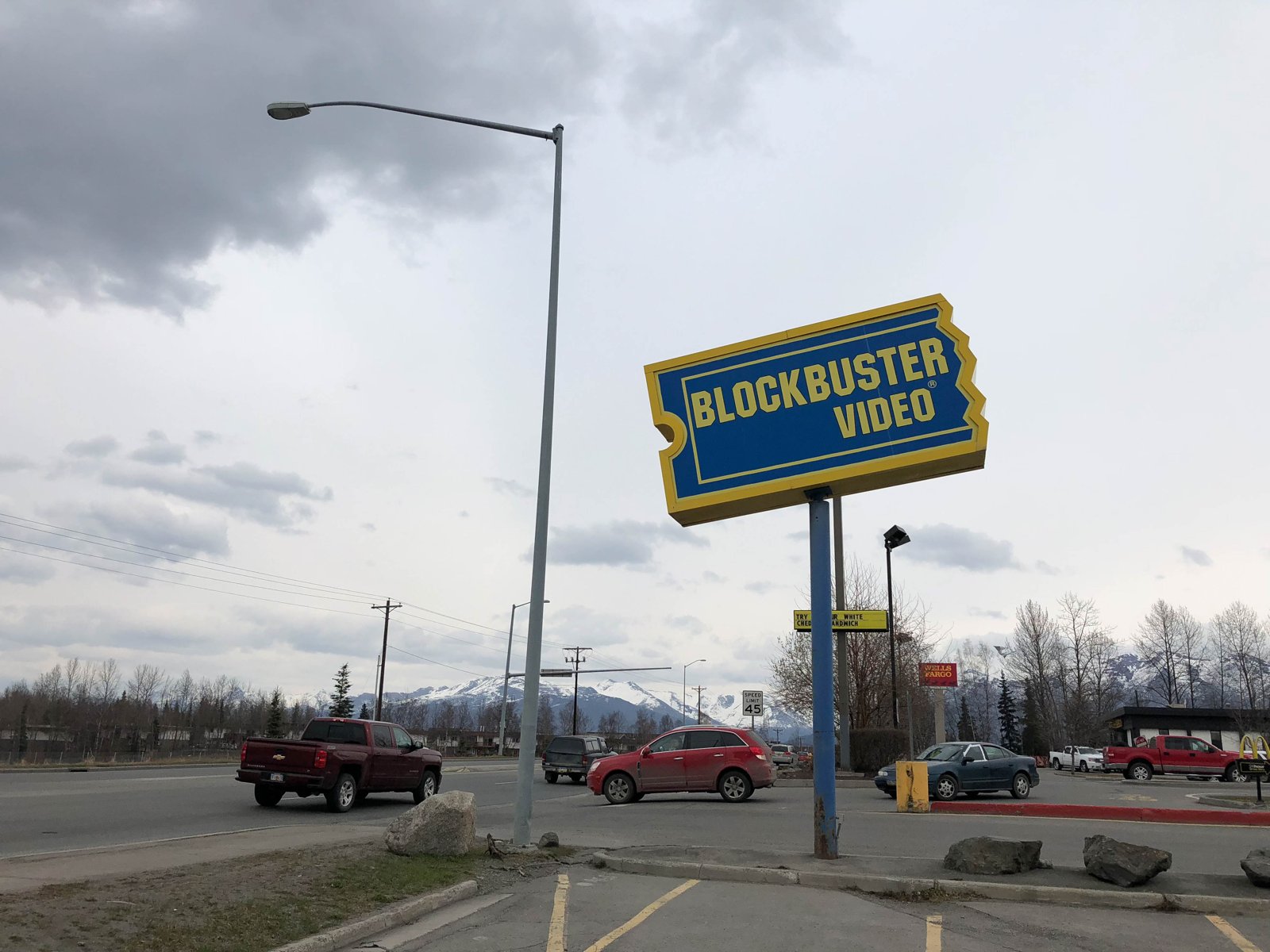
CHAPTER 01
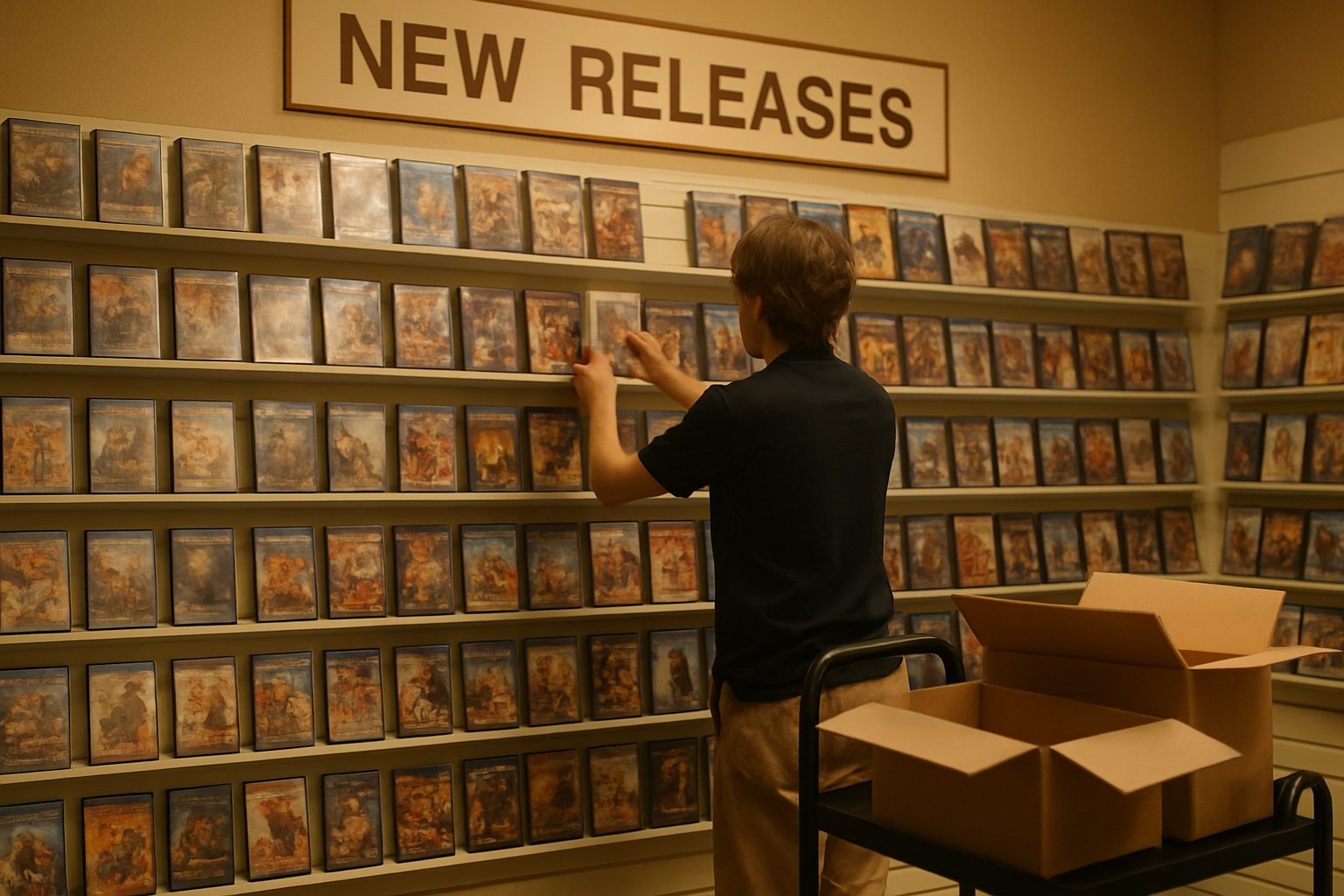
If your memory says new movies hit the wall on a Friday night, that memory is doing what nostalgia does — smoothing a Tuesday into the weekend because the weekend is where the memory of watching it actually lives. The real release day, every week, for the entire life of both chains, was Tuesday.
The reason was logistics, not marketing: distributors shipped new tapes and discs to every store — Blockbuster, Hollywood Video, and the independent place on the corner — on Monday afternoon, giving everyone the same overnight window to shelve and process before opening. It also lined up with the music industry's existing Tuesday album-release convention.
Not "Friday night, pick something." Tuesday: check what's new, and it sits on the shelf all week.
CHAPTER 02
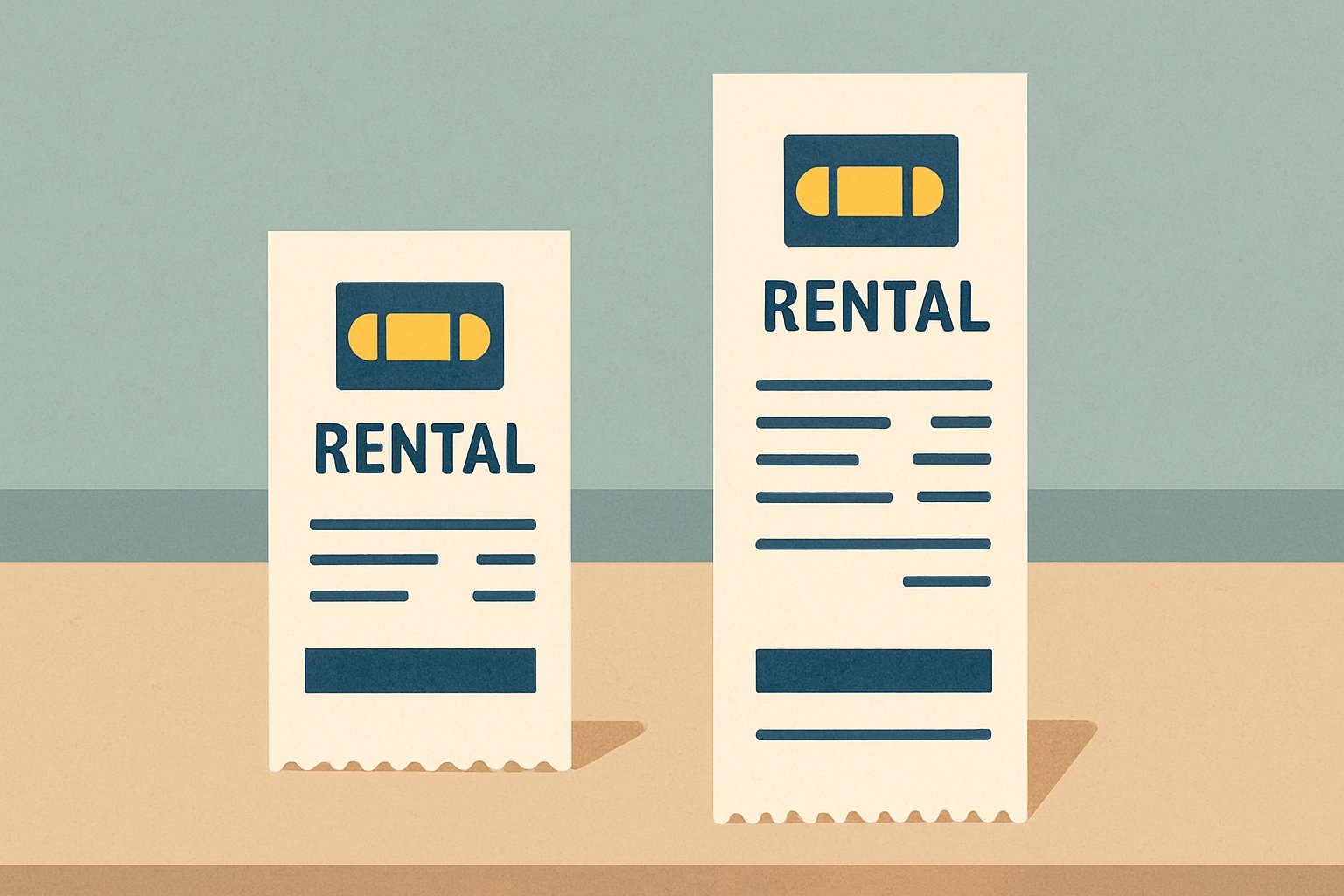
Neither chain had a real "grace period" once a movie was overdue. Blockbuster's late fees were notorious precisely because they started accruing almost immediately after the due date — reportedly generating around $800 million a year for the company at its peak. Hollywood Video charged late fees too, typically $1.19 to $1.99 a day past due.
The actual gap was upstream of all that: how long you got to keep the movie before it was even due. That's not a grace period on lateness. That's five real days to watch the thing before the clock even starts.
CHAPTER 03
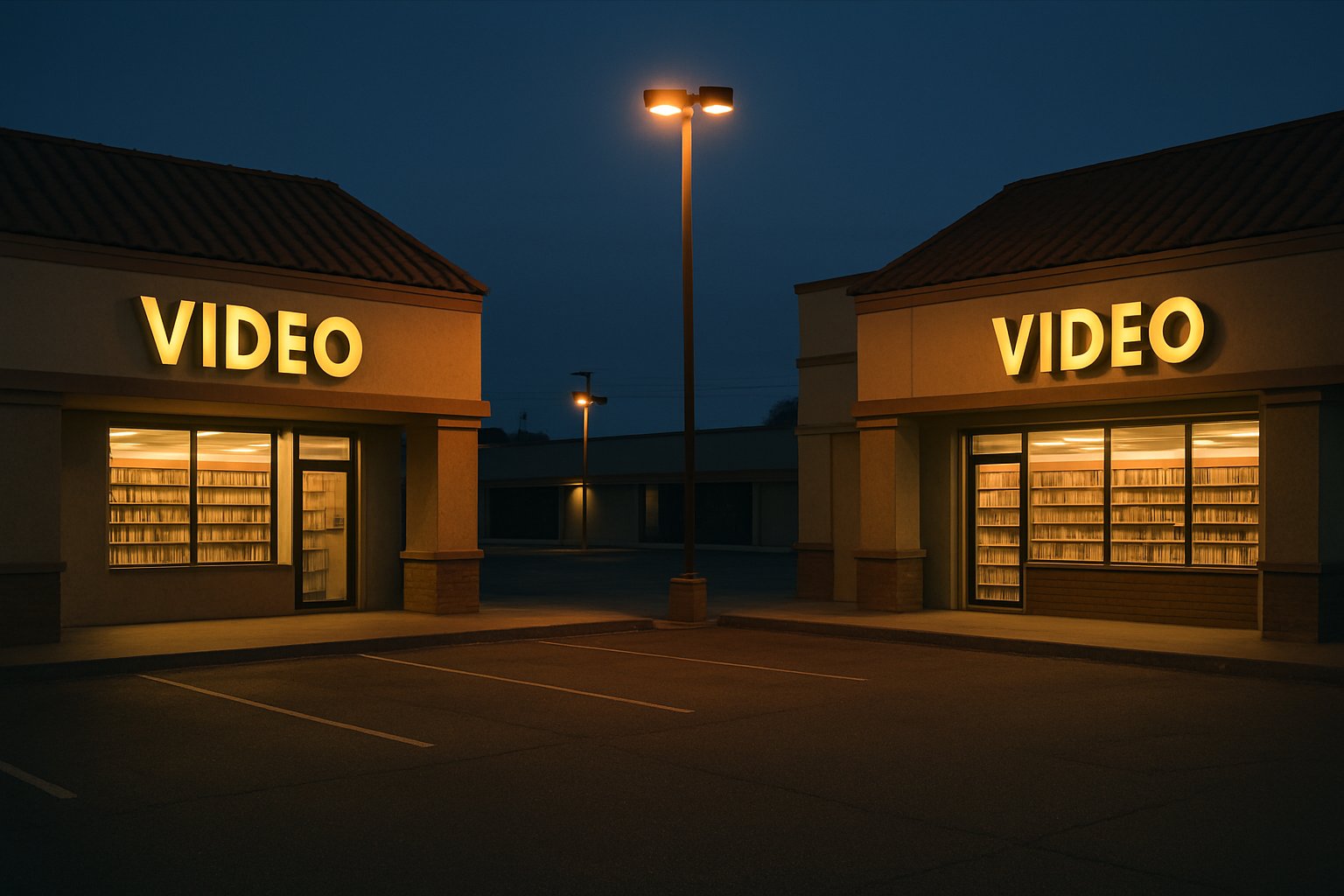
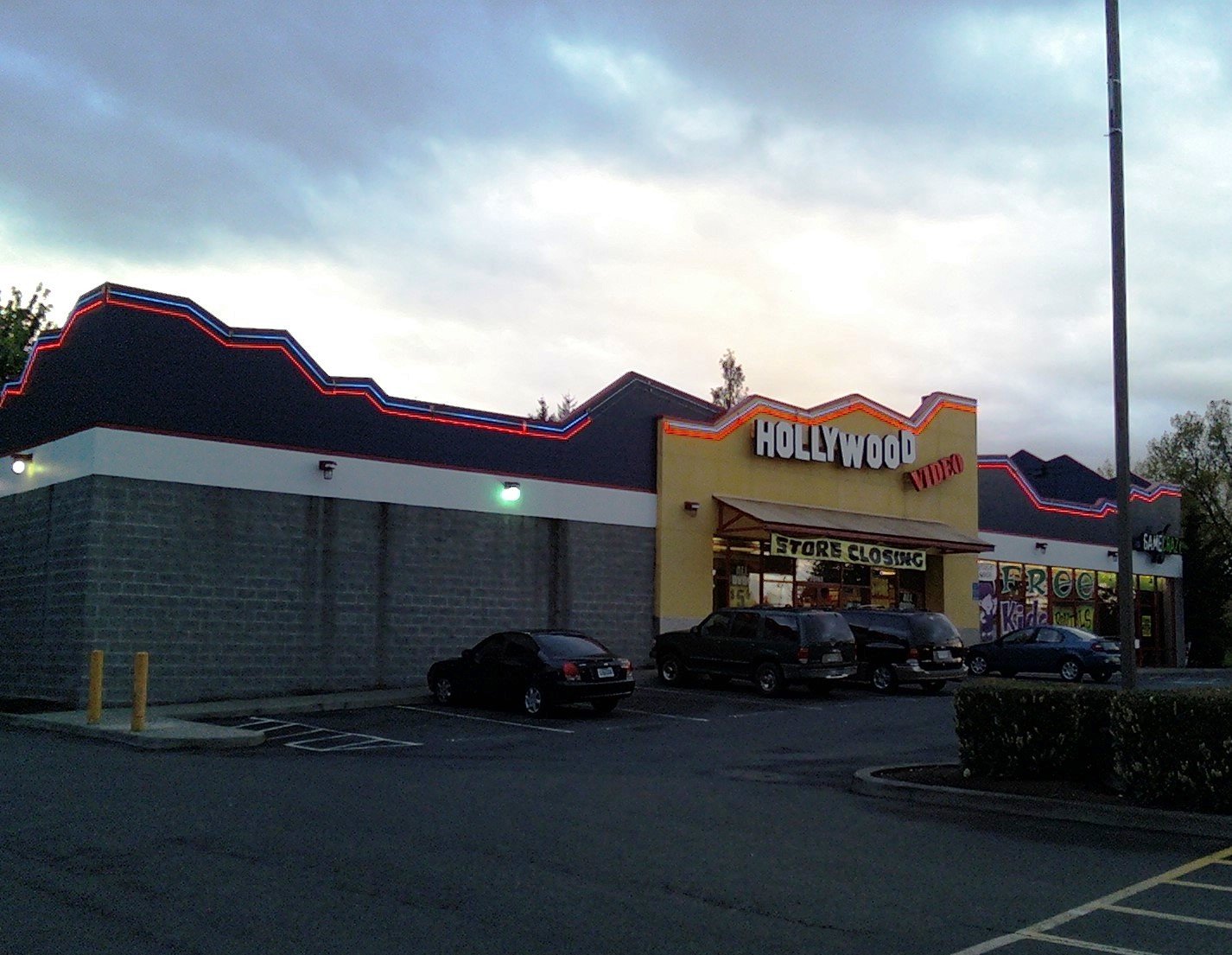
Blockbuster was founded in 1985 by David Cook in Dallas — at its 2004 peak, over 9,000 stores and more than 84,000 employees. Hollywood Video was founded in 1988 by Mark Wattles in Portland, Oregon, growing from 16 stores in 1993 to roughly 2,700 at its peak, Blockbuster's largest direct rival.
In 1999, a plan to rebrand Hollywood Video stores under the Blockbuster banner was blocked by federal antitrust regulators. Blockbuster tried a hostile takeover in December 2004; Hollywood Video instead accepted a $1.2 billion buyout from Movie Gallery in 2005.
CHAPTER 04
Blockbuster's 2010 bankruptcy gets more attention, but Hollywood Video was already gone in spirit years earlier — swallowed by Movie Gallery in 2005, then dragged down with it. Movie Gallery's own bankruptcy closed the last Hollywood Video doors on July 31, 2010, a few months after Blockbuster's own filing.
Neither company failed because the other won. Streaming, and the format itself, made the entire category obsolete at roughly the same time.
Two rivals, one shared cause of death — not each other, but the thing that replaced them both.
WHAT'S LEFT
One Blockbuster is still open, in Bend, Oregon — a tourist attraction now, not a rival to anything. Hollywood Video has no stores left at all.

Kingzley's Verdict
If you actually had to choose back then, Hollywood Video was the better deal for anyone who didn't watch a movie the night they rented it — five real days beats a Tuesday-to-Thursday deadline every time. Blockbuster won on convenience: more locations, easier to find, harder to have a bad night out because of it. Neither policy was villainous. One just assumed you had a life outside the due date.
RENTAL WINDOW OVER LATE-FEE MYTHCover and gallery photos of the real Bend, Oregon and Anchorage, Alaska Blockbuster locations, and the Hollywood Video closing sale in Aloha, Oregon, are real, independently sourced, credited photographs via Wikimedia Commons. Every other image on this page is AI-generated and clearly labeled as such. Company histories and policies were independently researched and verified against multiple sources.

Get new editions, deep dives and honest verdicts straight to your inbox.