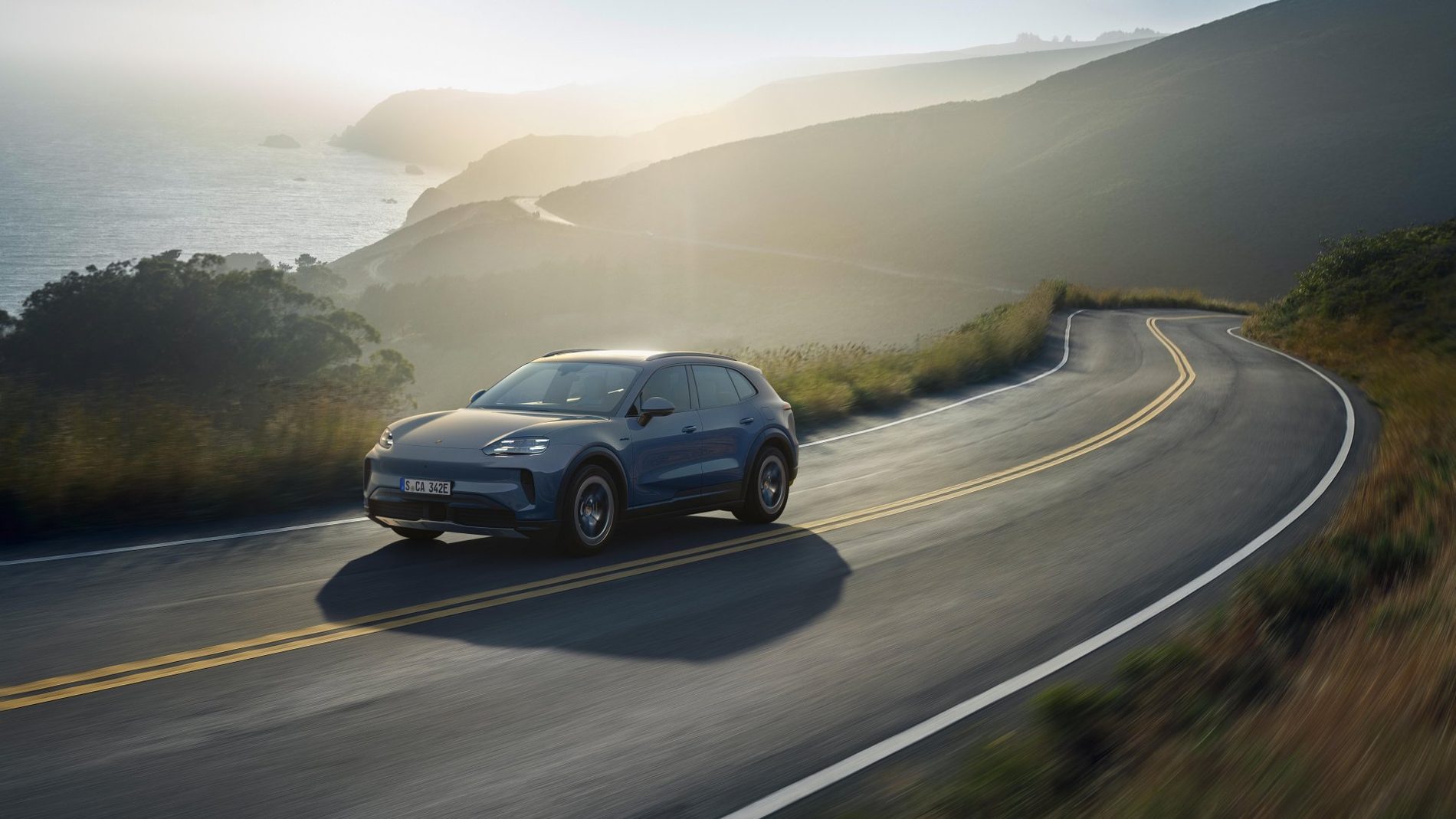
Quick take
- Three variants at launch, mirroring the SUV: 300 kW (408 PS), 400 kW (544 PS) and 630 kW (857 PS).
- Overboost with Launch Control lifts those to 325 kW (442 PS), 490 kW (666 PS) and 850 kW (1,156 PS).
- cd 0.23 against the SUV's 0.25 — worth up to 18 km more WLTP range, to a maximum of 669 km.
- 800-volt architecture, up to 390 kW DC and 400 kW under specific conditions; 11 kW AC standard, 22 kW optional.
- Same length and width as the SUV, 24 mm lower. Load volume 534–1,347 l plus a 90 l frunk.
The roofline is doing aerodynamic work, not just styling
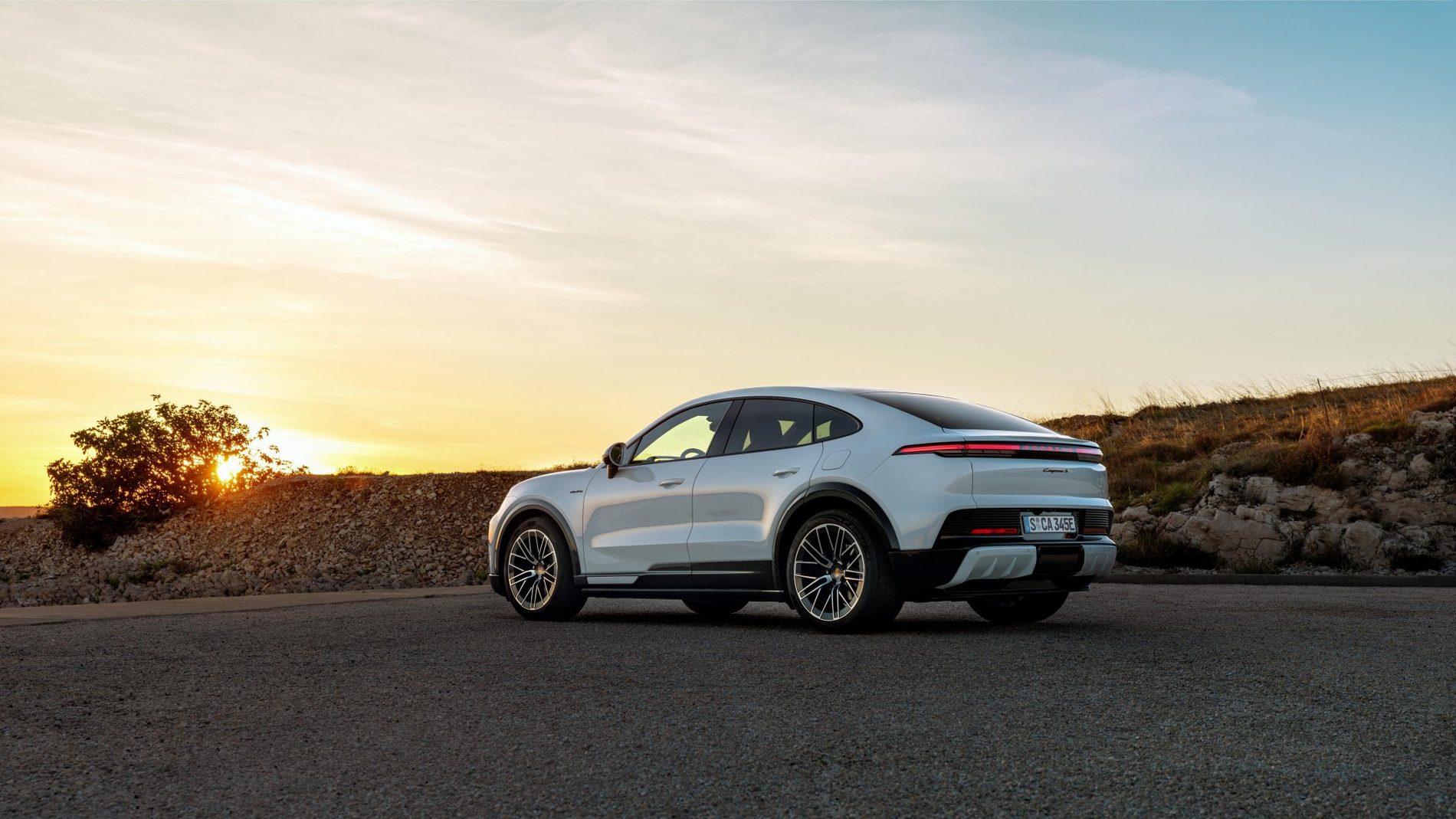
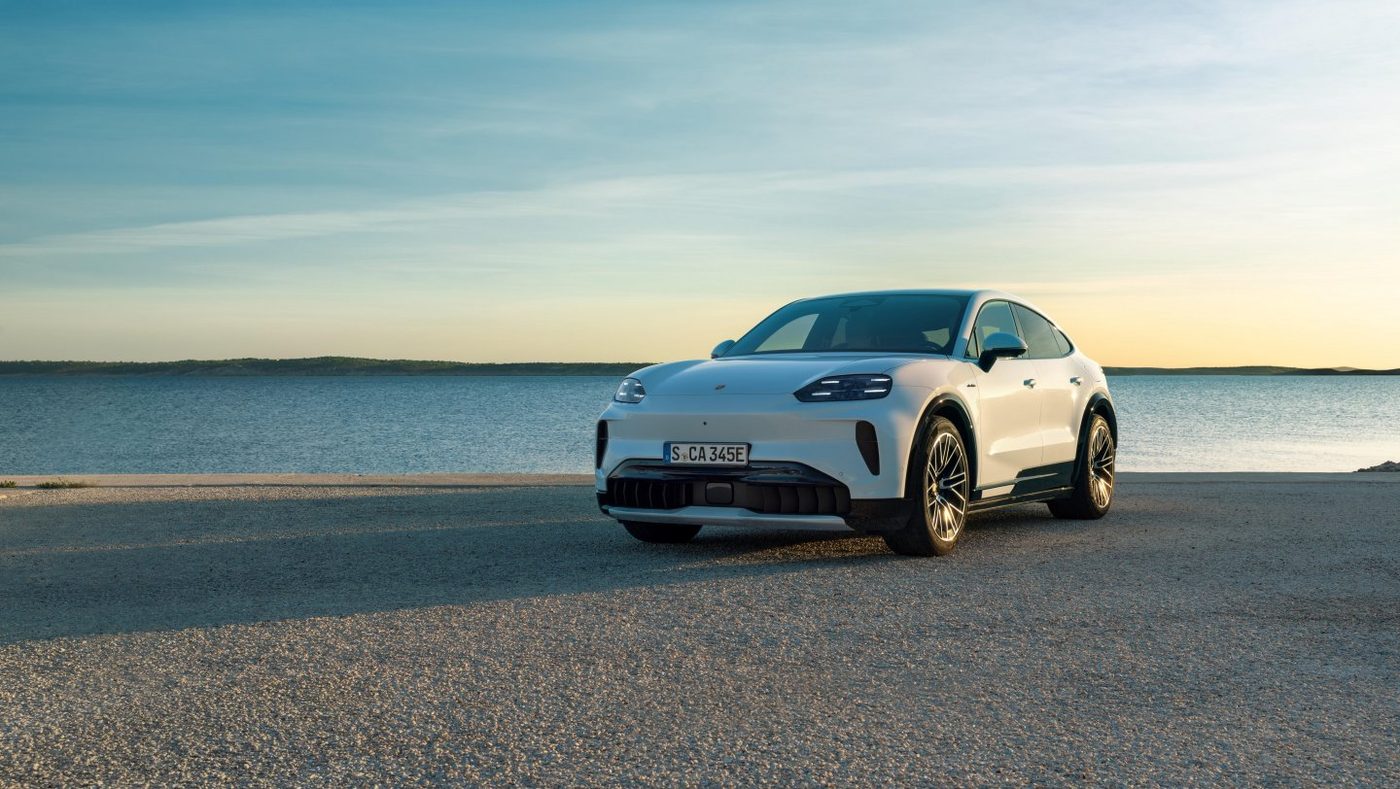
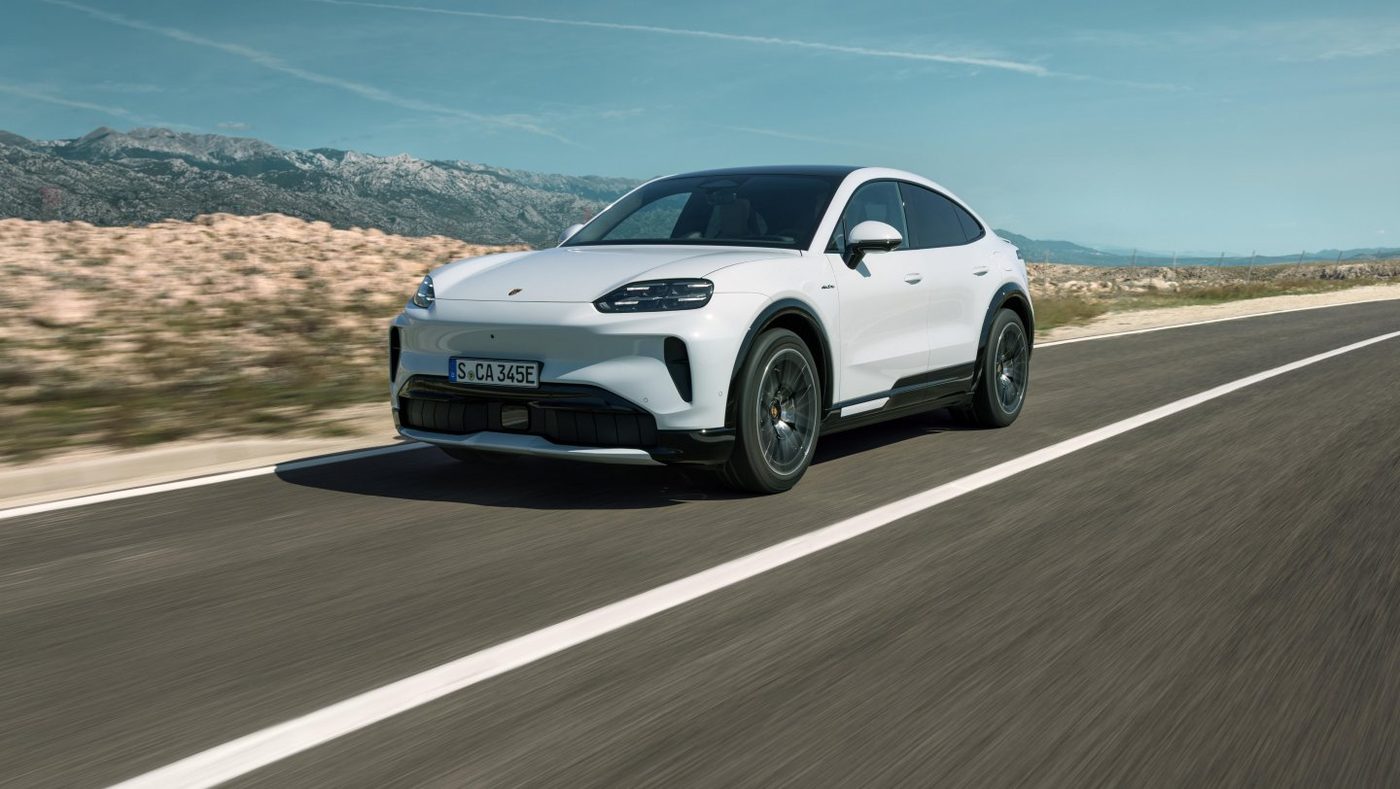
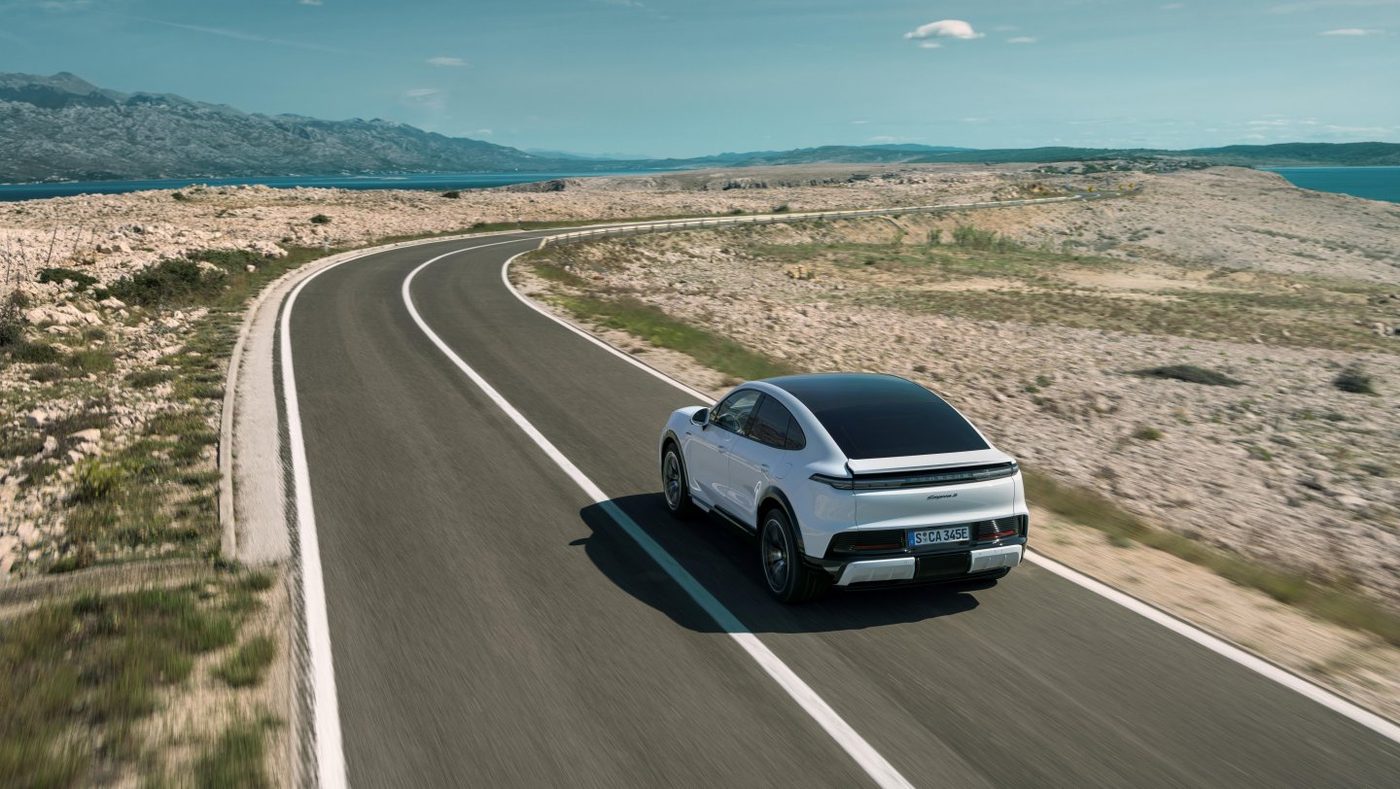
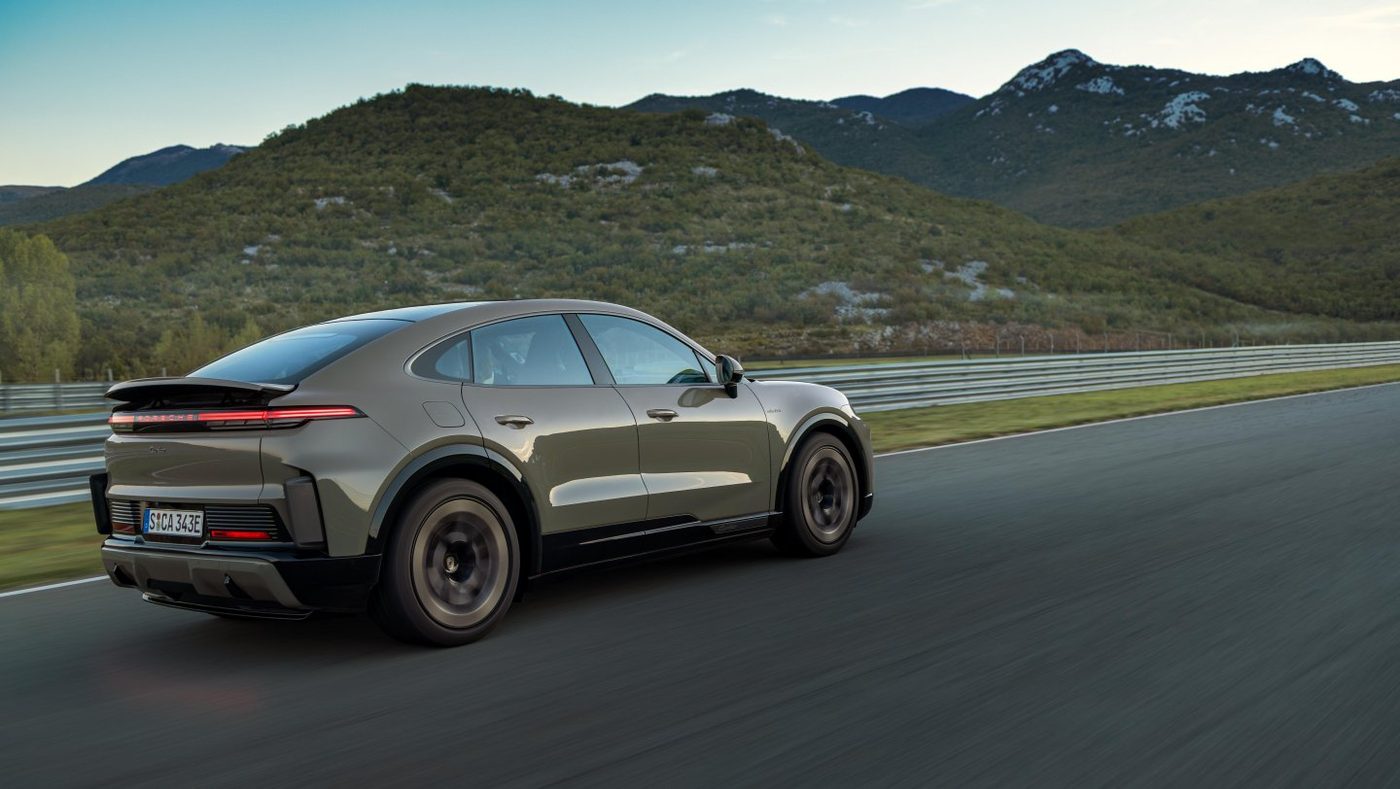
Porsche calls the sloping roof the "flyline", borrowed from the 911, and the coupé is a different car from the A-pillar back — including its own windscreen. The measurable consequence is a drag coefficient of 0.23 against the SUV's 0.25.
That difference is worth up to 18 kilometres of additional WLTP range, taking the best case to 669 km. It is a rare case of the sportier-looking version of a car being the more efficient one, and it happens because at motorway speed aerodynamic drag dominates everything else.
Three variants, and the overboost numbers are the headline
The line-up mirrors the SUV. The base Cayenne Coupé Electric produces 300 kW (408 PS), rising to 325 kW (442 PS) on overboost with Launch Control, 0–100 km/h in 4.8 seconds and 230 km/h. The S makes 400 kW (544 PS), 490 kW (666 PS) on overboost, 3.8 seconds and 250 km/h.
The Turbo is the one that reads like a misprint: 630 kW (857 PS), and 850 kW — 1,156 PS — with overboost, 0–100 km/h in 2.5 seconds and 260 km/h. Worth being clear about what overboost means: it is a Launch Control figure, not a number the car holds indefinitely.
Charging, and why 800 volts matters
The 800-volt architecture allows up to 390 kW on a suitable DC fast charger, and up to 400 kW under specific conditions. Higher voltage means the same power moves at lower current, which is what keeps cables and connectors manageable and heat under control.
AC charging is 11 kW as standard with a 22 kW on-board charger optional — that one matters more than it sounds for anyone charging at home or at work, where the AC rate is the real-world limit.
What a press release cannot tell you
Everything above is Porsche describing its own car, so here is what is still open.
Whether the sloping roof costs meaningful rear headroom in a car that is 24 mm lower than the SUV — the load figures are published, headroom is not. What the real-world range looks like against a WLTP number, and how it holds up in cold weather, which is where electric SUVs lose most. Whether the optional Porsche Active Ride suspension is worth having, or whether the standard adaptive air setup is already enough. And what 2.5 seconds actually feels like in a vehicle this heavy, which no specification conveys.
None of that is knowable from a press kit, and any review claiming otherwise before someone independent has driven it is describing a brochure.
| Specification | Porsche figure |
|---|---|
| Variants at launch | Cayenne Coupé Electric, S Coupé Electric, Turbo Coupé Electric |
| Power — base | 300 kW / 408 PS (overboost 325 kW / 442 PS) |
| Power — S | 400 kW / 544 PS (overboost 490 kW / 666 PS) |
| Power — Turbo | 630 kW / 857 PS (overboost 850 kW / 1,156 PS) |
| 0–100 km/h | 4.8 s / 3.8 s / 2.5 s |
| Top speed | 230 / 250 / 260 km/h |
| Consumption (WLTP) | 18.9–22.0 kWh/100 km depending on variant |
| CO₂ (WLTP) | 0 g/km, class A |
| Range (WLTP) | Up to 669 km |
| Drag coefficient | 0.23 |
| Dimensions | 4,985 mm long, 1,980 mm wide, 1,650 mm high |
| Load volume | 534–1,347 l, plus 90 l front compartment |
| Towing | Up to 3.5 tonnes |
| DC charging | Up to 390 kW (400 kW in specific conditions), 800 V |
| AC charging | 11 kW standard, 22 kW optional |
| Suspension | Adaptive air with PASM standard; Porsche Active Ride optional on S and Turbo |
| Rear-axle steering | Up to 5 degrees, available on all models |
| US price | Not published in this press material |
Common questions
Does the coupé have more range than the SUV?
Yes — Porsche says up to 18 km more on WLTP, to a maximum of 669 km, because the roofline lowers drag from 0.25 to 0.23.
How fast is the Turbo?
0–100 km/h in 2.5 seconds with overboost, and 260 km/h top speed.
Is boot space compromised by the roof?
Load volume is 534–1,347 litres plus a 90-litre front compartment. Porsche has not published rear headroom, which is the figure the roofline would affect most.
Can you still tow with it?
Yes — up to 3.5 tonnes, and an off-road package is available.
Have you driven it?
No. Orders are open, but nobody here has driven one and no independent test exists. Everything here is Porsche's published material.
The interesting thing about the Coupé is that its styling decision has a measurable engineering payoff — normally the sportier body costs you range, and here it buys some. That makes the usual coupé-versus-SUV argument less about taste than it typically is.
What is not yet answerable is everything about how it drives, rides and holds range in the real world. We will revisit this when US figures exist and someone independent has driven one.
DopamineKart has not conducted a hands-on test drive of this vehicle; this article is a research-based breakdown, not a road test. Sources. Porsche Newsroom — Inspired by an icon: the new Cayenne Coupé Electric, Porsche Newsroom — Porsche expands all-electric SUV lineup with the Cayenne S, Porsche Newsroom — Cayenne Electric. Technical figures are Porsche's own published data; consumption, range and CO₂ are WLTP and are not comparable with US EPA figures. Porsche notes figures may vary by country. Photography is Porsche press material, used for editorial reporting and credited per image. No affiliate links appear on this page.
This article contains no affiliate links and no buy buttons — DopamineKart does not monetise vehicle coverage.
Corrections: email us